

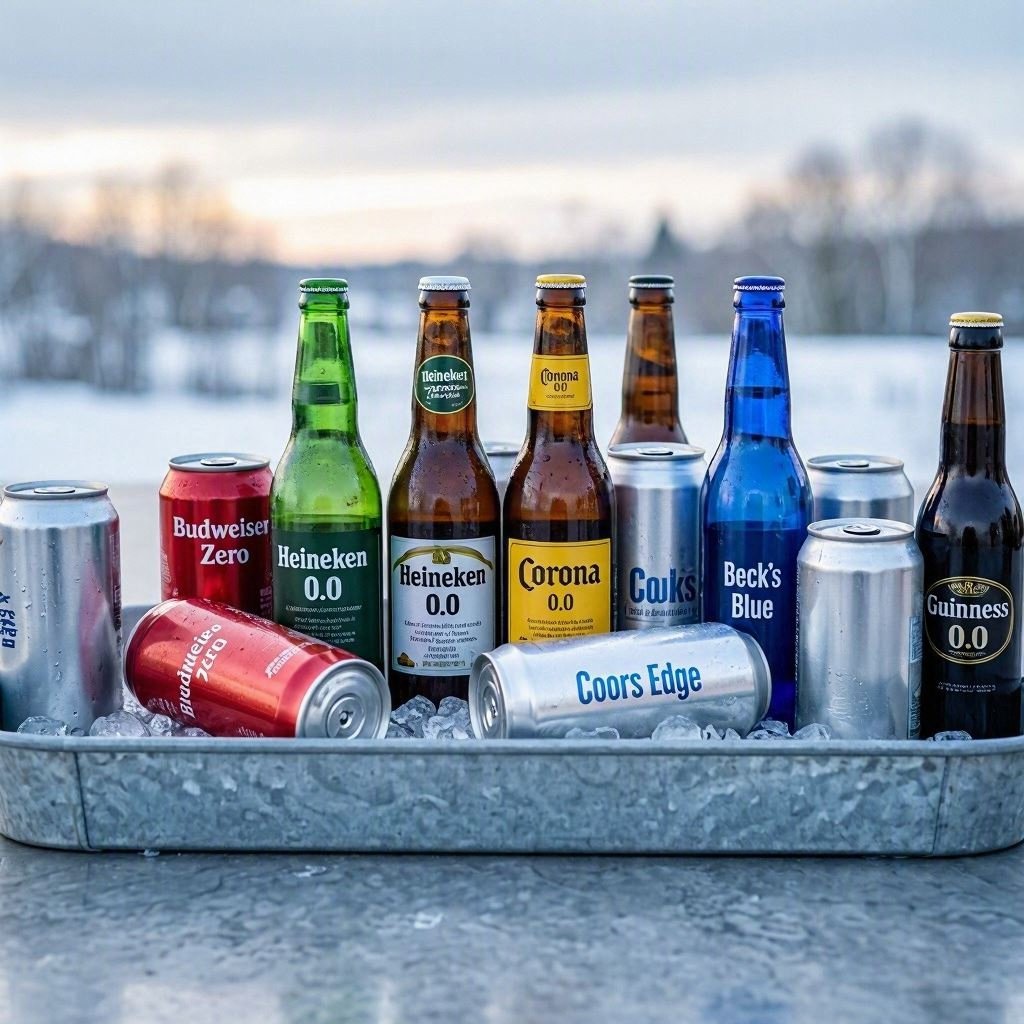
Low calories non alcoholic beer is one of the fastest-growing categories in the beverage world, and the calorie range is wider than most people expect — from as little as 10 calories per can up to around 90, depending on the brand and style. These beers typically contain less than 0.5% alcohol by volume (ABV) while delivering a fraction of the calories of regular beer, making them appealing for weight management, fitness lifestyles, and responsible social drinking.
Why the Category Keeps Growing
Non-alcoholic beer is consistently reported as one of the fastest-growing segments of the entire beer industry, though the exact market-size figures vary considerably between research firms depending on how they define the category — estimates for 2026 alone range from roughly $8.5 billion to $25 billion globally, which is too wide a spread to treat any single number as settled fact.
What’s consistent across every report, regardless of methodology, is the direction: steady, multi-year growth driven by more health-conscious drinking habits, improved brewing technology, and a widening set of options beyond the mainstream lagers that used to dominate the category.
Industry tracking from Global Market Insights highlights Athletic Brewing as one of the leading dedicated non-alcoholic breweries, reflecting how specialized NA brands — not just legacy beer companies adding a 0.0 version — have become serious competitors.
That shift matters for calorie-conscious drinkers specifically: it’s the dedicated non-alcoholic breweries like Partake, Athletic Brewing, and Go Brewing — not the legacy names — currently producing the lowest-calorie options on the market.
Quick Definition
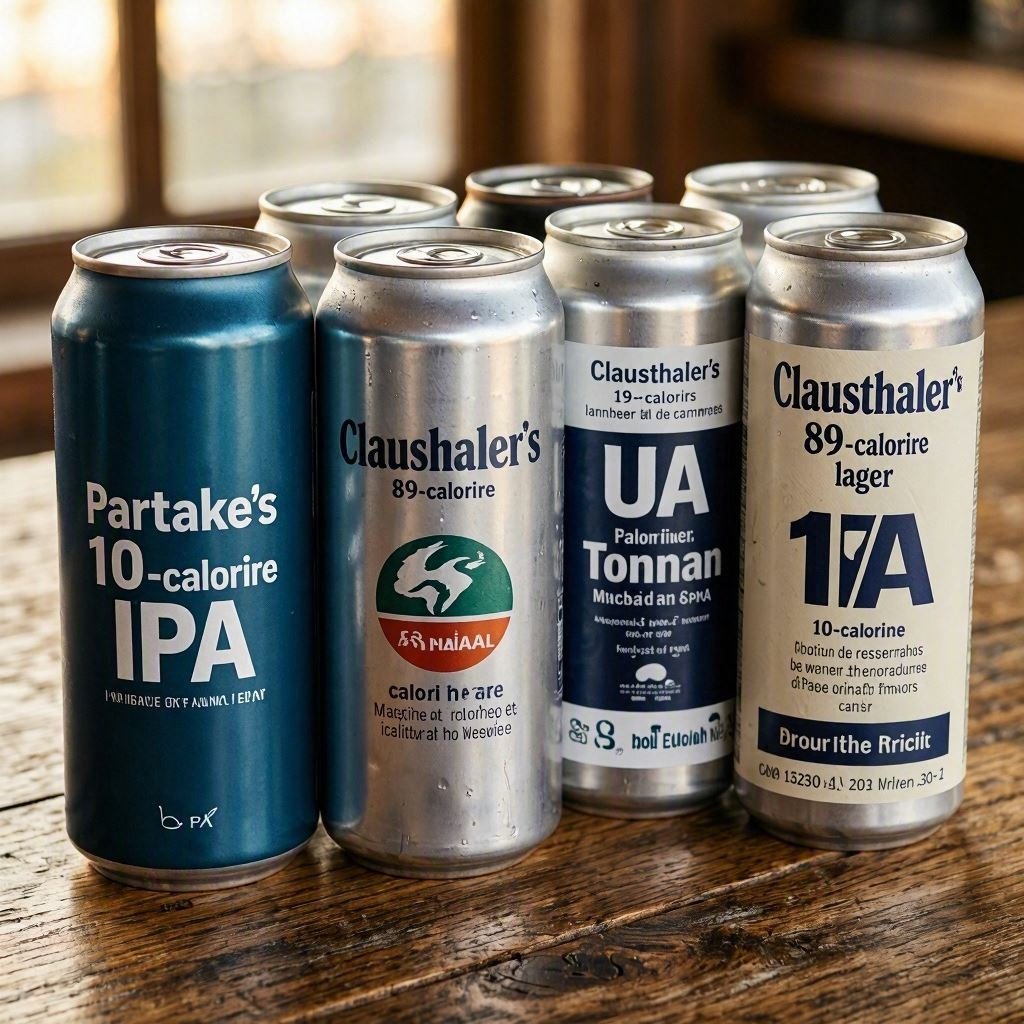
Low calorie alcohol-free beer is a brewed beverage containing less than 0.5% alcohol and typically under 90 calories per serving, with the lowest-calorie options on the market now dipping as low as 10 calories per can.
What Is the Lowest Calorie Non Alcoholic Beer?
As of 2026, the lowest-calorie non alcoholic beers on the market come from Partake Brewing, whose IPA and Pale Ale both contain just 10 calories per 12 oz can — confirmed directly on Partake’s own product pages. That’s dramatically lower than most people expect from a beer of any kind, alcoholic or not, and it’s achieved through a proprietary low-calorie brewing method rather than dilution.
Beyond Partake, several other brands have built their entire identity around ultra-low-calorie non alcoholic beer. Athletic Brewing’s Athletic Lite comes in at 25 calories, and Go Brewing’s Suspended in a Sunbeam Pils sits at 43 calories — both figures confirmed on the brands’ own websites. These sit well below the more widely recognized mainstream options like Heineken 0.0 or Budweiser Zero, which are still genuinely low-calorie by beer standards but not the lowest available.
If your priority is the absolute lowest calorie count rather than the most recognizable name, a dedicated non-alcoholic craft brewery like Partake, Athletic Brewing, or Go Brewing is currently going to beat a mainstream brand’s alcohol-free variant.
Best Low Calories Non Alcoholic Beer Brands, Lowest to Highest
| Brand | Calories | ABV | Style |
|---|---|---|---|
| Partake Brewing IPA | 10 | <0.5% | IPA |
| Partake Brewing Pale Ale | 10 | 0.3% | Pale Ale |
| Athletic Brewing Athletic Lite | 25 | <0.5% | Light Beer |
| Go Brewing Suspended in a Sunbeam Pils | 43 | <0.5% | Pilsner |
| Budweiser Zero | 50 | 0.0% | American Lager |
| Athletic Brewing Run Wild IPA | 65 | <0.5% | IPA |
| Heineken 0.0 | 69 | 0.0% | Lager |
| Clausthaler Original | 89 | 0.5% | German Lager |
All eight calorie figures above are taken directly from each brand’s own product pages or official nutrition disclosures, not third-party estimates, so they should match what’s printed on the can.
Calorie values may vary slightly by market and can size, so check the label on the specific product available in your region.
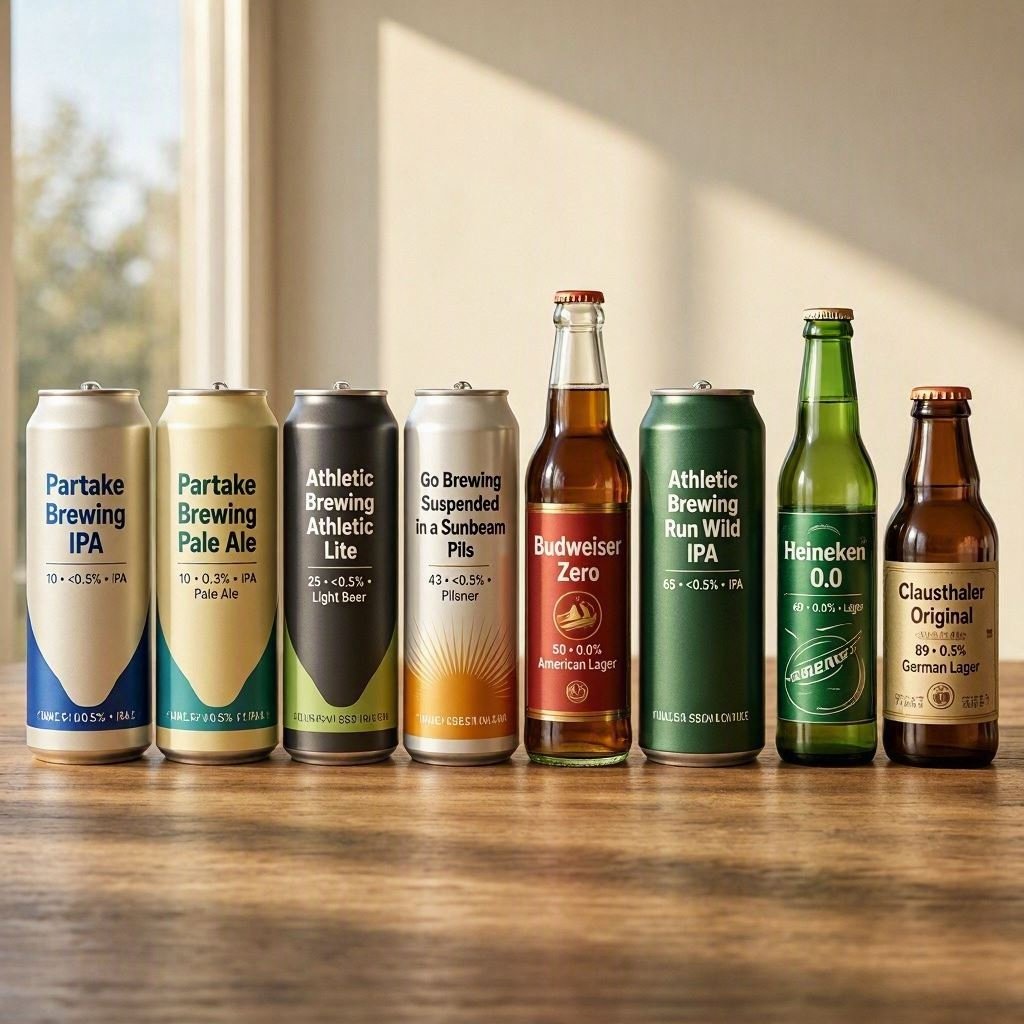
Heineken 0.0 provides balanced malt sweetness and gentle hop bitterness, maintaining a classic European lager taste profile. Athletic Brewing Run Wild IPA delivers bold hop aroma and citrus flavor with a full-bodied texture despite its low calorie count. Clausthaler Original is brewed using traditional German methods for a balanced malt complexity and smooth finish. Budweiser Zero focuses on smooth, familiar drinkability at one of the lowest calorie counts among mainstream lager brands.
Nutritional Profile and Health Considerations
Alcohol-free beer contains significantly fewer calories and carbohydrates compared to traditional beer. Because alcohol contributes substantial calorie density, removing alcohol dramatically reduces total calorie intake.
According to the World Health Organization (WHO), alcohol consumption contributes additional empty calories that may influence long-term weight management and metabolic health, which is one reason lower-alcohol beverage alternatives are gaining attention among health-conscious consumers.
- Typically 50–90% fewer calories than regular beer
- Lower carbohydrate content depending on brewing method
- Hydration support without alcohol-related dehydration
- Contains natural antioxidant compounds derived from hops
- Often lower glycemic impact than traditional beer
How Alcohol Contributes to Calorie Intake
Alcohol contains approximately seven calories per gram, higher than either carbohydrates or protein. In traditional beer, alcohol content significantly increases total calorie levels, so removing or reducing alcohol lowers the beverage’s overall caloric density. Calorie content in alcohol-free beer still depends on brewing method and residual sugar, which is why the range across brands runs from 10 calories to nearly 90.
Alcohol-Free Beer and Exercise Recovery
Beyond the calorie savings, some athletes choose alcohol-free beer specifically because of what regular alcohol does to post-exercise recovery. A controlled study published in PLOS ONE (Parr et al., 2014) had physically active men complete a strenuous training session, then consume either protein alone, alcohol with protein, or alcohol with carbohydrate. Muscle biopsies showed that alcohol co-ingested with protein reduced the rate of muscle protein synthesis by 24% compared to protein alone, and alcohol with carbohydrate reduced it by 37% — even when adequate protein was available afterward.

That research is specifically about alcohol’s effect on recovery, not about beer flavor or calories, but it explains a real reason some athletes reach for a 0.0% option after training: the recovery-impairing effect comes from the ethanol itself, and a genuinely alcohol-free beer sidesteps that mechanism entirely while still delivering the post-workout ritual and rehydration.
Alcohol-Free Beer vs Regular Beer Calories
| Beverage Type | Average Calories | Alcohol Content |
|---|---|---|
| Regular Beer | 140–180 calories | 4.5% – 5% |
| Light Beer | 90–110 calories | 3% – 4% |
| Alcohol-Free Beer | 10–90 calories | 0.0% – 0.5% |
Common Myths About Low Calories Non Alcoholic Beer
Myth 1: Alcohol-Free Beer Has No Flavor
Modern brewing technology allows alcohol-free beer to maintain complex flavor profiles comparable to traditional beer. Advances in fermentation control, hop selection, and alcohol removal technology have significantly improved taste quality.
Myth 2: Alcohol-Free Beer Contains No Alcohol at All
Most alcohol-free beers contain trace alcohol levels, typically below 0.5% ABV. This level is considered non-intoxicating and complies with alcohol-free labeling regulations in many countries.
Myth 3: Alcohol-Free Beer Always Contains More Sugar
While some alcohol-free beers contain residual sugars, modern brewing techniques allow many brands to control sugar content effectively. Low-calorie alcohol-free beer options are specifically designed to balance flavor and nutritional value.
How To Choose the Best Low Calories Non Alcoholic Beer
Calorie levels vary widely between alcohol-free beer brands — from 10 calories to nearly 90 in the options covered here — so checking the label matters more in this category than with regular beer, where the range is narrower.
- Check the calorie count on the can — don’t assume “alcohol-free” means uniformly low-calorie
- Compare carbohydrate and sugar levels alongside calories
- Choose a dedicated non-alcoholic brewery (Partake, Athletic Brewing, Go Brewing) for the lowest calorie counts
- Choose a mainstream brand’s 0.0 variant if familiar flavor matters more than the absolute lowest number
- Try multiple styles — lagers, IPAs, and pilsners vary in both flavor and calorie count
Comparison: Low Calories Non Alcoholic Beer vs Regular Beer
| Feature | Low Calories Non Alcoholic Beer | Regular Beer |
|---|---|---|
| Alcohol Content | 0.0% – 0.5% ABV | 4% – 6% ABV (average) |
| Calorie Content | Typically 10 – 90 calories | Typically 150 – 220 calories |
| Hydration Impact | Minimal dehydration | Can contribute to dehydration |
| Mental Clarity | No intoxication | Impairment possible |
| Fitness Compatibility | Supports active lifestyle | May interfere with recovery |
Food Pairing With Alcohol-Free Beer
- Lagers pair well with grilled chicken, seafood, and salads
- IPAs complement spicy dishes and strong-flavored cheeses
- Pilsners match light pasta dishes and fresh vegetables
- Craft alcohol-free beers pair with gourmet burgers and barbecue meals
Serving and Storage Tips
- Serve alcohol-free lagers and pilsners between 3°C and 6°C
- Serve IPAs slightly warmer to enhance aroma complexity
- Store cans and bottles in cool, dark environments
- Avoid prolonged heat exposure to preserve carbonation and flavor
- Consume fresh for optimal taste quality
Frequently Asked Questions About Low Calories Non Alcoholic Beer
What is the lowest calorie non alcoholic beer?
As of 2026, Partake Brewing’s IPA and Pale Ale are the lowest at 10 calories per can, confirmed on Partake’s own product pages. Athletic Brewing’s Athletic Lite (25 calories) and Go Brewing’s Suspended in a Sunbeam Pils (43 calories) are also among the lowest available.
What is considered low calories non alcoholic beer?
Low calories non alcoholic beer typically contains less than 0.5% alcohol and ranges between 10 and 90 calories per serving, depending on brewing method and brand.
Is low calories non alcoholic beer healthier than regular beer?
Alcohol-free beer generally contains fewer calories and eliminates alcohol-related health risks, making it a popular option for individuals seeking balanced drinking alternatives.
Can low calories non alcoholic beer help with weight loss?
Replacing traditional beer with alcohol-free beer may reduce daily calorie intake and support weight management goals when combined with balanced nutrition and active lifestyle habits.
Does low calories non alcoholic beer taste like traditional beer?
Modern brewing technology allows alcohol-free beer to closely replicate traditional beer taste, although minor flavor differences may exist depending on brewing techniques and brand formulation.
Final Thoughts on Low Calories Non Alcoholic Beer
Low calories non alcoholic beer now spans a genuinely wide range — from Partake’s 10-calorie IPA to mainstream 0.0 options in the 65–90 calorie range. Which one is “best” depends on whether you’re optimizing purely for the lowest number or for a flavor profile closest to a familiar brand. Either way, checking the actual label beats assuming any alcohol-free beer is automatically low in calories, since the gap between the lowest and highest options here is nearly ninefold.
Sources:
- Partake Brewing — IPA and Pale Ale product pages (10 calories each)
- Athletic Brewing — Athletic Lite (25 calories) and Run Wild IPA (65 calories) product pages
- Go Brewing — Suspended in a Sunbeam Pils product page (43 calories)
- Heineken — Heineken 0.0 official product page (69 calories)
- World Health Organization — Alcohol fact sheet
- Parr EB, et al. “Alcohol Ingestion Impairs Maximal Post-Exercise Rates of Myofibrillar Protein Synthesis Following a Single Bout of Concurrent Training.” PLOS ONE, 2014 — PMC3922864
- Global Market Insights — Non-Alcoholic Beer Market report
This article is developed using brand-published nutrition data verified directly from each brewery’s official product pages, alongside WHO guidance on alcohol and calorie intake and peer-reviewed exercise-science research. Content is periodically updated as brands release new products or revise recipes.
Related reading: Browse the Calories category
Reviewed by Chloe MacAllister · Last updated September 5, 2026




 Trudy Banks
 Chloe MacAllister
[…] reading: Calories in Grilled Chicken Breast · Low Calories Non Alcoholic Beer · Browse all our Calorie […]