

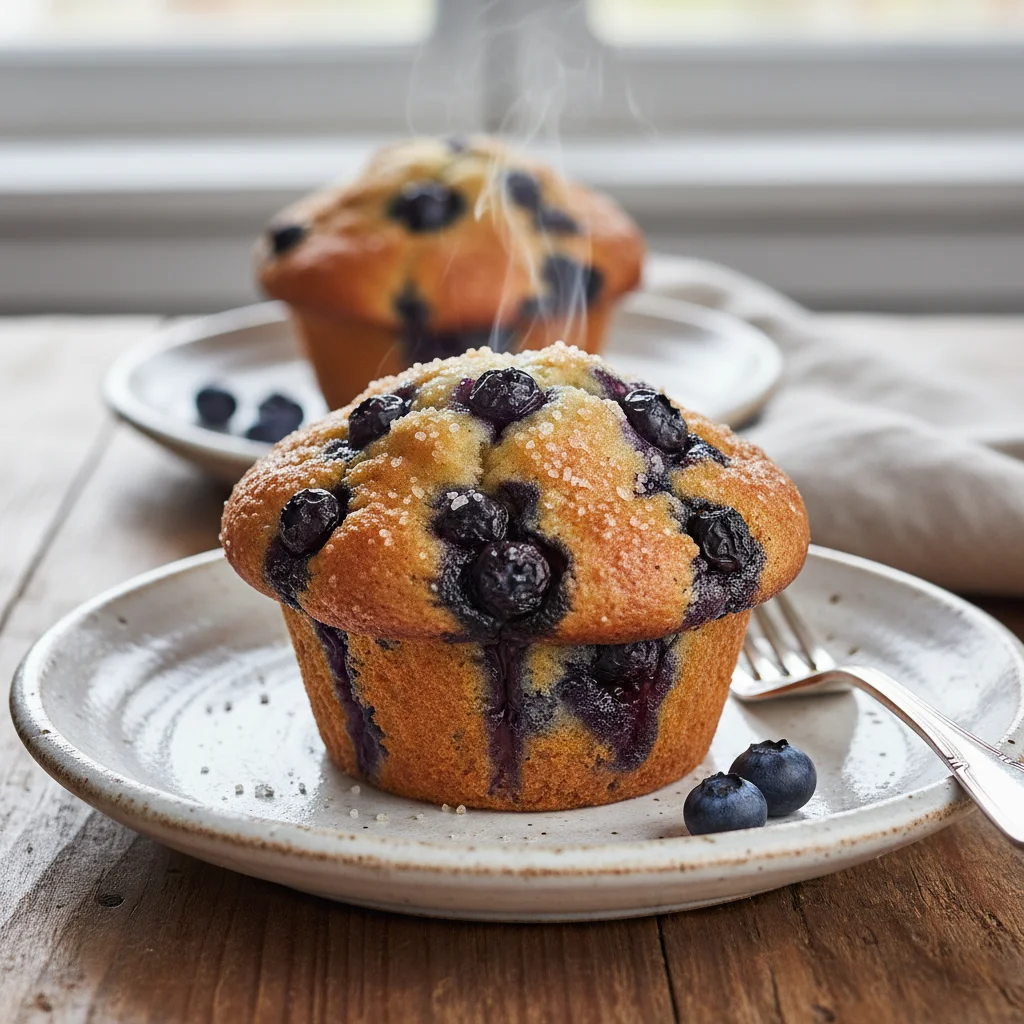
Calories in a blueberry muffin can range from about 105 in a mini muffin to more than 600 in a jumbo bakery version. A small muffin may contain around 200 calories, a medium muffin about 400–425, and a large coffee-shop muffin around 500–550. Jumbo warehouse-bakery muffins can reach 600 calories or more. The exact number depends on weight, added fat and sugar, toppings, and the specific brand — there is no single figure that applies to every blueberry muffin.
Calories in a Blueberry Muffin by Size
Size is the single biggest factor behind how many calories are in a blueberry muffin — a mini and a jumbo version of the same recipe can differ by 500 calories or more.
There is no single calorie count for every blueberry muffin. A small homemade or grocery-store muffin can contain well under 200 calories, while a large coffee-shop muffin can run more than triple that. The most reliable number for any specific product is always its own nutrition label — the figures below are reference points for comparison, not a substitute for that.
Approximate calories by muffin size
These estimates use a commercially prepared blueberry-muffin reference value of 375 calories per 100 g. The figures are scaled by weight for comparison, while actual calories vary by recipe, brand and serving size. USDA also lists other blueberry-muffin entries with different values, so these numbers should not be treated as universal nutrition facts.
| Muffin size | Approx. weight | Calories | Why it varies |
|---|---|---|---|
| Mini (1 oz) | 28 g | ~105 | Small portion with limited batter and topping |
| Small (2 oz) | 57 g | ~214 | Close to a light homemade or grocery-store muffin |
| Medium (4 oz) | 113 g | ~424 | Standard size for many packaged and bakery muffins |
| Large (5 oz) | 142 g | ~533 | Typical coffee-shop size; often includes streusel topping |
| Jumbo (6 oz) | 170 g | ~638 | Warehouse-bakery portions can run this large or bigger |
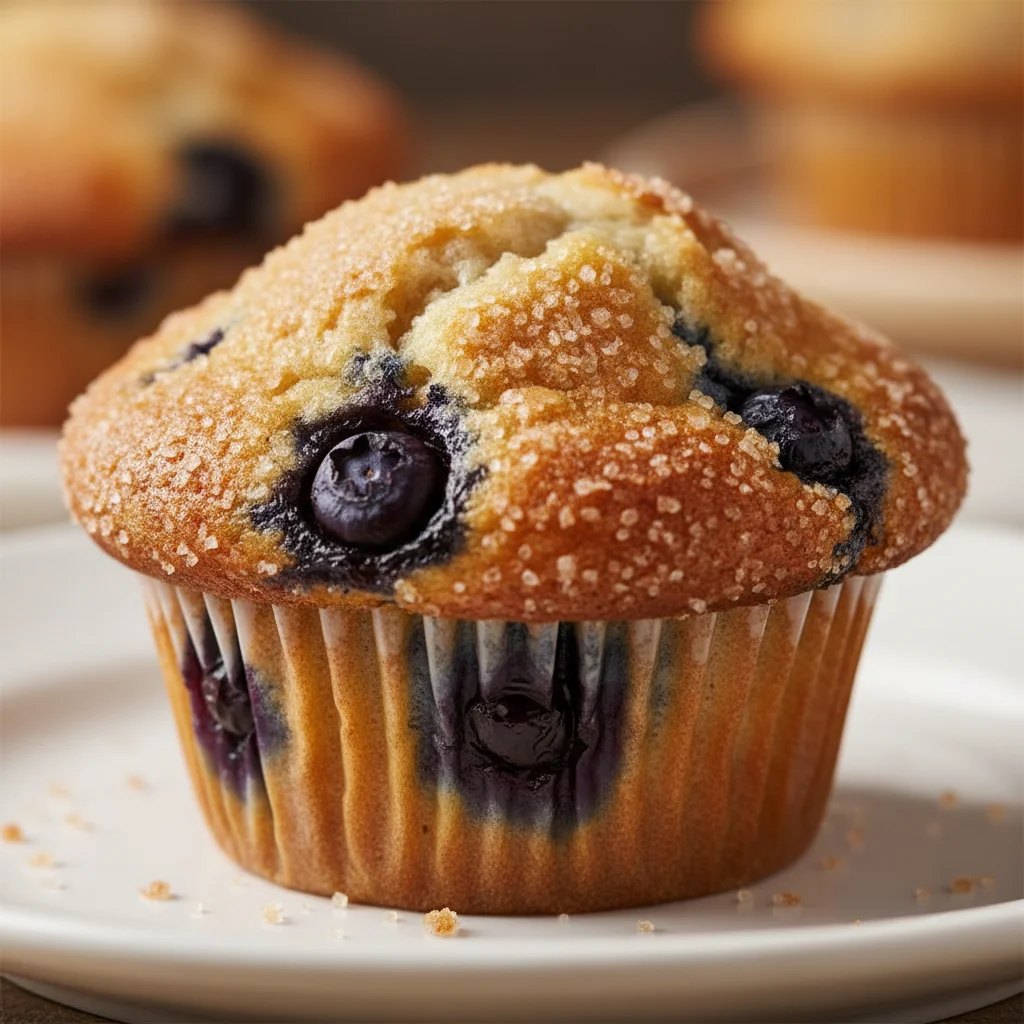
On this reference basis, 100 g provides 16.1 g fat, 53 g carbohydrate and 4.5 g protein. Scaling those figures to a 113 g portion gives roughly 18 g fat, 60 g carbohydrate and 5 g protein. Actual nutrition can differ substantially between recipes and brands. These are practical estimates, not a guarantee for any specific product: two muffins of the same weight can still land on different sides of this table if one uses noticeably more butter, oil, sugar, or streusel than the other.
Why Blueberry Muffin Calories Vary
Blueberries add flavor and moisture, but they’re rarely the reason a muffin is high in calories. Most of the calorie count comes from the batter and whatever topping goes on before baking. Five things tend to drive the difference between one muffin and another:
- Added fat. Butter and oil make a muffin richer and more cake-like — more fat generally means more calories.
- Added sugar. Batter sugar plus a streusel or sanding-sugar topping can raise the total well beyond what the fruit contributes.
- Portion size. A coffee-shop muffin can weigh two to three times as much as a small homemade one.
- Toppings. Crumble, glaze, and icing add calories without making a muffin look much bigger.
- Recipe differences. A light homemade muffin and a dense bakery one can differ a lot even at a similar size.

Where the Calories Actually Come From, Ingredient by Ingredient
Breaking a standard recipe down by ingredient shows why blueberries barely move the calories in a blueberry muffin. A typical batch uses flour, sugar, butter or oil, eggs or dairy, and blueberries — flour and sugar supply most of the carbohydrate, while butter or oil contributes most of the fat and calories.
| Ingredient | How it affects calories | Typical role |
|---|---|---|
| Blueberries | Add flavor and moisture with relatively few calories compared with the batter | Fruit component |
| Flour | Provides much of the carbohydrate and energy | Main dry ingredient |
| Sugar | Raises calories and sweetness | Used in the batter or topping |
| Butter or oil | Contributes a substantial amount of fat and energy | Adds richness and moisture |
| Streusel, glaze or icing | Can add extra calories beyond the basic muffin | Optional topping |
A full cup of fresh blueberries adds up to roughly 84 calories total — split across a dozen muffins, that’s about 7 calories per muffin from the fruit itself. The butter, sugar, and any topping alone can outweigh that many times over, which is why a “blueberry” muffin’s calorie count tracks closer to its cake-like batter than to the fruit named on the label.
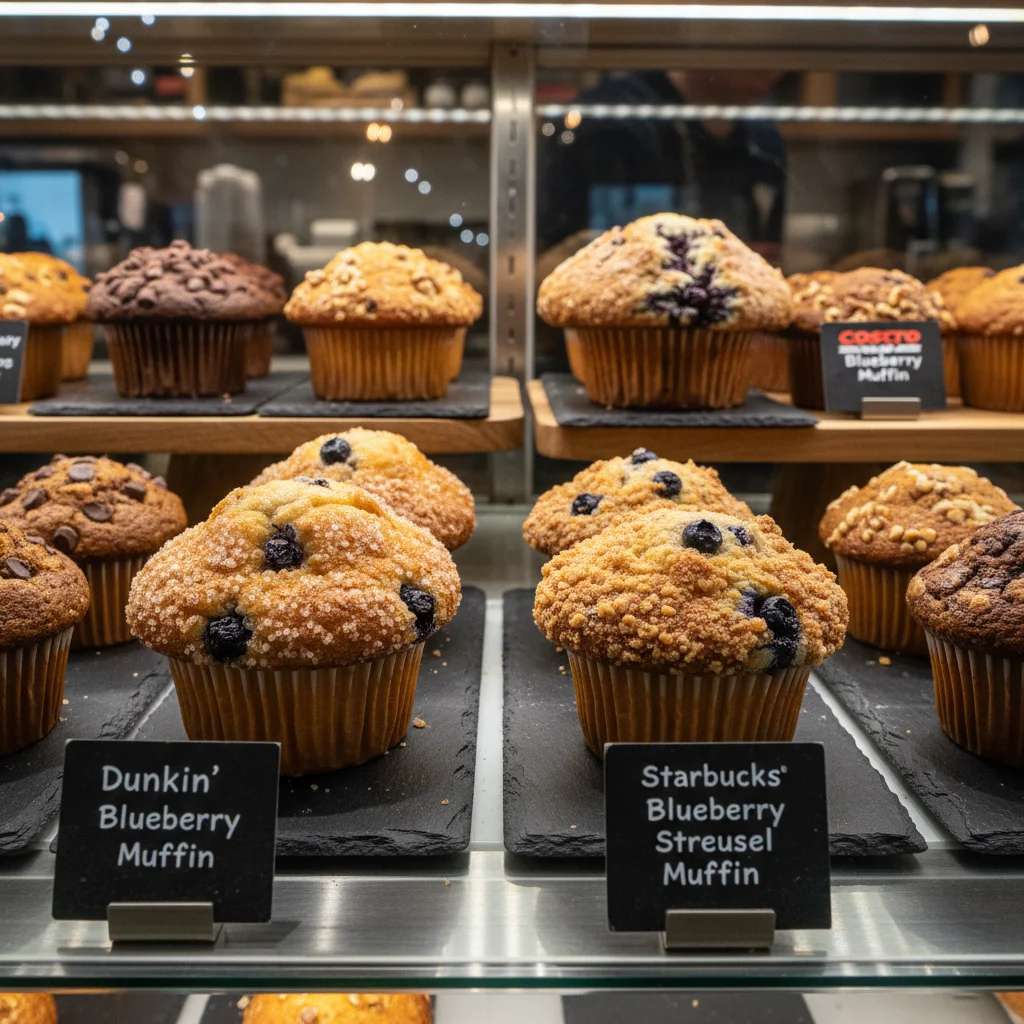
Calories in Blueberry Muffins From Popular Bakery Brands
Once you know the calories in a blueberry muffin by size, the next question is how a specific brand compares — and this is where the biggest real-world differences show up.
Brand comparisons are useful, but only when the serving size and exact product are clear — bakery products change size and recipe over time, and the same brand can differ across markets.
| Brand or product | Serving | Calories | Fat | Sugar |
|---|---|---|---|---|
| Dunkin’ Blueberry Muffin | 1 muffin | 460 | 15 g | 44 g (41 g added) |
| Starbucks Blueberry Streusel Muffin | 1 muffin, ~105 g | 370 | 18 g | 27 g total |
| Costco blueberry muffin | Varies by format | Varies — see note | — | — |
Dunkin’s blueberry muffin is commonly listed at about 460 calories per muffin, but nutrition information can change. Check Dunkin’s current nutrition listing for the exact serving and nutrient values before relying on this figure. That is a substantial amount of added sugar for one muffin, especially when combined with a sweetened coffee drink. Dietary guidance commonly recommends limiting added sugar, so checking both the muffin and drink together gives a more realistic picture of the meal.
Starbucks lists its Blueberry Streusel Muffin — the name it currently uses — at 370 calories, 18 g fat, and 27 g total sugar for a roughly 105 g serving. It’s topped with cinnamon streusel, so it isn’t a perfect match for a plain homemade muffin of the same weight.
Costco needs more caution than a single number can offer — the format has changed more than once. Reports range from roughly 420–460 calories for newer, smaller Kirkland Signature formats up to around 600 calories for older jumbo versions, but those figures come from different years, not one confirmed current product. The label printed on the container is the only reliable number for what’s on shelves right now.
Are Blueberry Muffins Healthy?
A blueberry muffin can fit into a balanced diet, but the word “blueberry” doesn’t automatically make it a low-calorie or low-sugar food. Many bakery muffins sit closer to a small cake than to a serving of fruit, since they’re built on refined flour, added sugar, and a meaningful amount of butter or oil. U.S. dietary guidance commonly uses a limit of less than 10% of daily calories from added sugar — on a 2,000-calorie diet, that’s about 50 grams a day, which a single large bakery muffin can eat into significantly on its own.
That doesn’t make it off-limits — it’s more useful to treat a large coffee-shop muffin as a dessert-style breakfast than as the nutritional equivalent of fresh blueberries. Pairing a smaller muffin with a protein source like plain yogurt or eggs tends to make for a more balanced meal than eating a large muffin alone.
Blueberry Muffin Calories Compared With Other Muffins
Flavor alone doesn’t determine calories. A blueberry muffin with a heavy streusel topping can contain more calories than a plain muffin, while a small homemade blueberry muffin can contain fewer than a large chocolate-chip one. The fairest comparison is based on the same weight and the same type of nutrition data, because recipes and serving sizes vary widely.
How to Choose a Lower-Calorie Blueberry Muffin
- Choose a smaller muffin, or eat half of a large one.
- Compare actual weight, not just the label “muffin.”
- Look for options without streusel, glaze, or icing.
- Check the label before pairing it with a sweetened coffee drink.
- If baking at home, use less added sugar and butter or oil.
- Pair it with a protein source if it’s part of breakfast.
A Lighter Homemade Option
A homemade muffin can land well below bakery numbers when the recipe uses less added fat and sugar, a smaller portion, and more fruit. Harvard’s Great Muffin Makeover recipe lists about 120 calories per muffin, but that is a specific lighter recipe and should not be treated as the calorie count for blueberry muffins generally. The trade-off is texture: a lighter recipe tends to be less rich and more cake-like than a bakery streusel-topped muffin.
Rather than assuming any “light” recipe hits a specific number, the most accurate approach is weighing the finished batch and dividing its total nutrition by the number of muffins — more reliable than comparing by appearance alone.
How to Store Blueberry Muffins
For the best texture, keep muffins in a sealed container at room temperature if you plan to eat them within a day or two. For longer storage, freezing works better than refrigerating — wrap muffins individually, place them in a freezer-safe bag, and thaw at room temperature or warm gently before eating. Refrigerating tends to dry muffins out faster than either option, and packaged products with cream or custard fillings may have their own storage instructions worth following instead.
The Bottom Line on Calories in a Blueberry Muffin
To sum up the calories in a blueberry muffin: a mini one runs around 105 calories, a medium one around 424, and a large muffin around 533 on this reference basis. A jumbo warehouse-bakery muffin can reach about 638 calories or more. The exact number depends mainly on weight, recipe, toppings and brand. The blueberries themselves are usually only one part of the total calorie count. For a packaged or restaurant muffin, the label or current nutrition page is always the best source; for a homemade one, calculating from the actual recipe beats comparing by appearance.
FAQ
How many calories are in a blueberry muffin?
It depends heavily on size. A mini muffin runs around 105 calories, a medium 4-ounce muffin around 424, a large 5-ounce muffin around 533, and a jumbo 6-ounce muffin around 638 or more on this reference basis.
How many calories are in a Starbucks blueberry muffin?
Starbucks lists its Blueberry Streusel Muffin at 370 calories, 18 g fat, and 27 g total sugar for a roughly 105 g serving.
How many calories are in a Dunkin’ blueberry muffin?
A Dunkin’ blueberry muffin is commonly listed at about 460 calories per muffin, but the current figure should be checked against Dunkin’s nutrition information because menu data can change.
How many calories are in a Costco blueberry muffin?
It varies by format — reports range from around 420–460 calories for newer, smaller recipes up to roughly 600 for older jumbo versions. Check the container label for the current figure.
Are blueberry muffins healthier than other muffin flavors?
Somewhat — blueberry muffins run lower than chocolate chip (~400 cal/100g) but higher than bran (~270 cal/100g). “Blueberry” isn’t automatically the lowest-calorie option.
Can I make a lower-calorie blueberry muffin at home?
Yes — cutting added butter and sugar while using more fresh blueberries can bring a homemade muffin down to roughly 120 calories each.
Related reading: Avocado Calories Per 100g · Calories in Peanut Butter and Jelly Sandwich · Browse the Calories category
Sources:
- U.S. Department of Agriculture, FoodData Central — reference data for commercially prepared blueberry muffins; values in the size table are scaled by weight.
- Harvard T.H. Chan School of Public Health, The Great Muffin Makeover — example of a lighter muffin recipe and its nutrition information.
- Mayo Clinic Health System — added sugar daily guidance.
- Starbucks — Blueberry Streusel Muffin nutrition page.
- Dunkin’ — current product nutrition information is available through the official Dunkin’ nutrition portal. Check the current listing before relying on the calorie and sugar figures.
Reviewed by Chloe MacAllister · Last updated September 3, 2026



 Trudy Banks
 Chloe MacAllister