

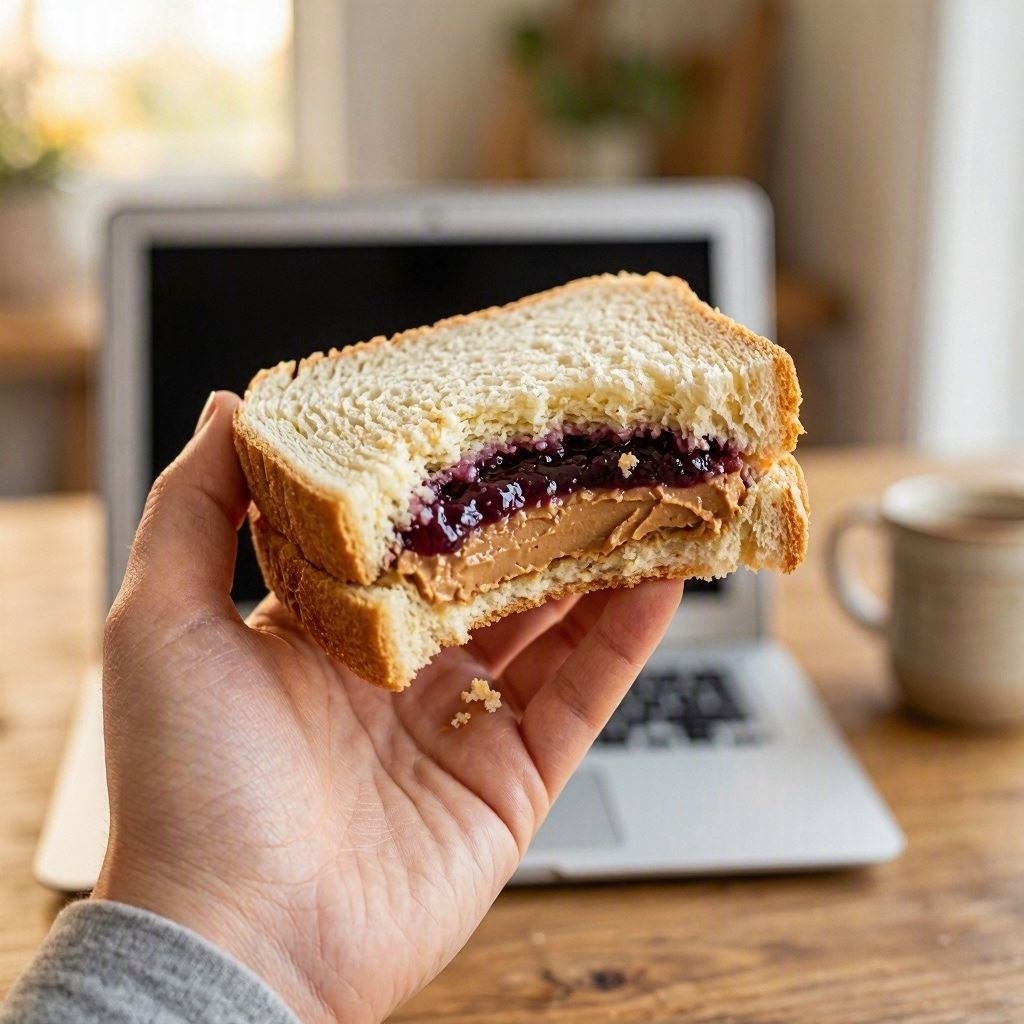
Calories in peanut butter and jelly sandwich add up to about 380 for a standard build — two slices of bread, two tablespoons of peanut butter, and one tablespoon of jelly. That number swings more than most foods people track, though, since it depends entirely on how much of each ingredient goes on, which is exactly why you’ll see wildly different totals (anywhere from 230 to over 500 calories) across different nutrition sites.
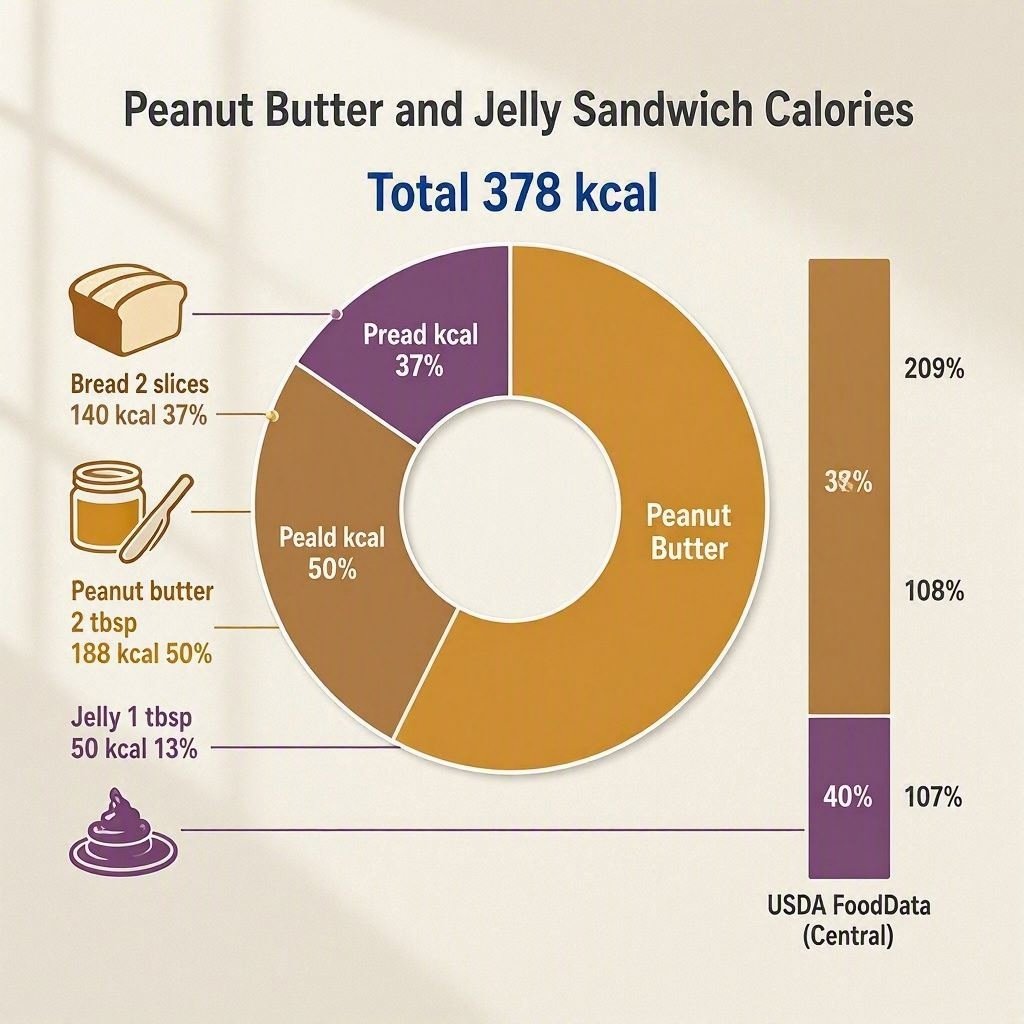
Calories in Peanut Butter and Jelly Sandwich, Ingredient by Ingredient
Rather than rely on one aggregator’s single number, it’s more useful to build the total from the actual ingredients — that way you can adjust it to match how you actually make yours.
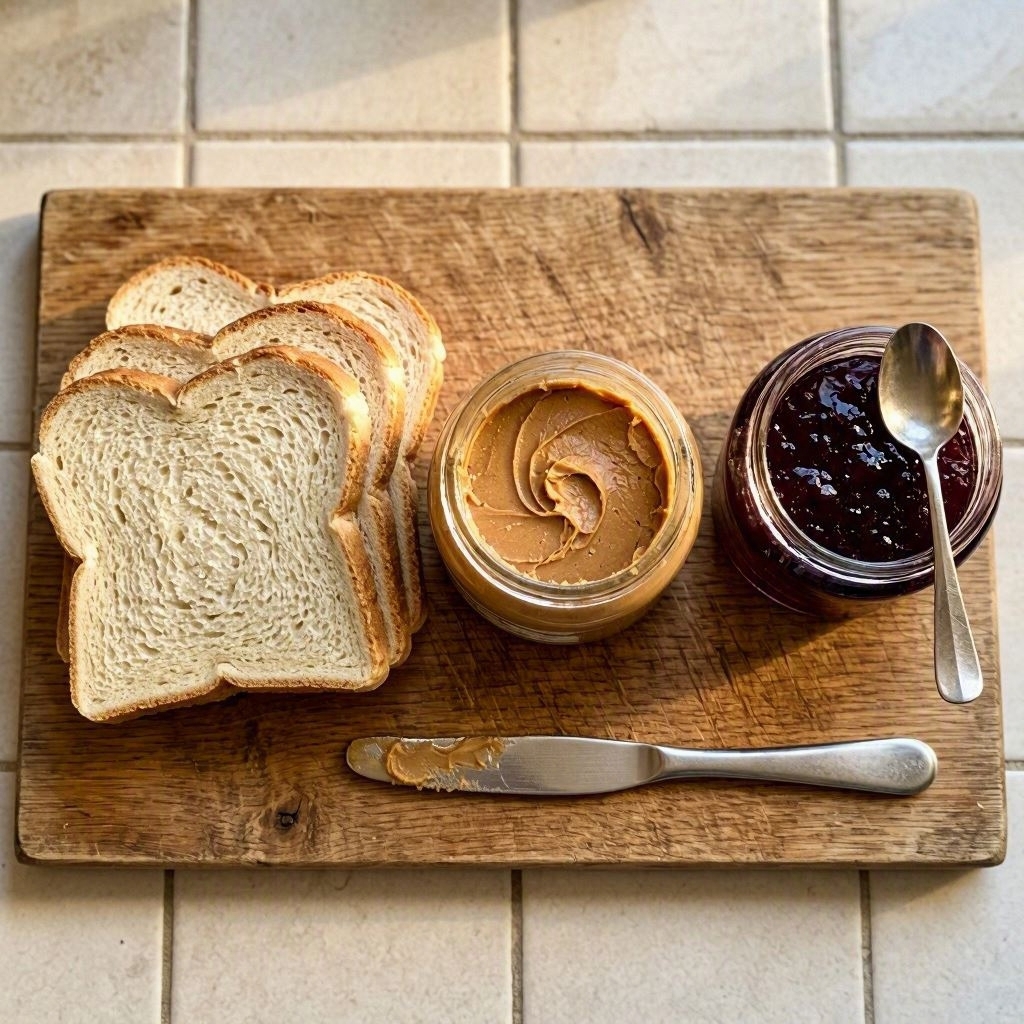
| Ingredient | Amount | Calories |
|---|---|---|
| Sandwich bread | 2 slices (56g) | 140 |
| Peanut butter | 2 tbsp (32g) | 190 |
| Jelly | 1 tbsp (20g) | 50 |
| Standard total | 380 | |
| Jelly (heavier hand) | 2 tbsp (40g) | 100 |
| Total with 2 tbsp jelly | 430 | |
| Peanut butter (light) | 1 tbsp (16g) | 95 |
| Total with 1 tbsp PB, 1 tbsp jelly | 285 |
The peanut butter is doing most of the caloric heavy lifting here — it’s more than double the calories of the bread and nearly four times the jelly, tablespoon for tablespoon. If you’re trying to adjust the total, the peanut butter amount is where you’ll see the biggest swing.
Full Nutrient Profile (Standard Build)
Here’s the fuller nutritional picture for the standard version — 2 slices bread, 2 tbsp peanut butter, 1 tbsp jelly:
| Nutrient | Amount | % Daily Value* |
|---|---|---|
| Calories | 380 | 19% |
| Protein | 13g | 26% |
| Fat | 17g | 22% |
| Saturated Fat | 3.5g | 18% |
| Carbohydrates | 46g | 17% |
| Fiber | 3g | 11% |
| Sugar | 16g | — |
| Sodium | 410mg | 18% |
Based on a 2,000-calorie diet. Values approximate, built from USDA FoodData Central figures for the individual ingredients.
Most of the protein and fat come from the peanut butter, while nearly all the sugar comes from the jelly — the bread contributes mostly carbohydrate and a modest amount of fiber, more if you use whole wheat.
Why the Calorie Count Varies So Much
A few things move the number far more than they would for a simpler food:
- Peanut butter amount — the single biggest lever. Going from 1 tablespoon to 2 adds roughly 95 calories on its own.
- Jelly amount — a second tablespoon adds about 50 calories, less dramatic than peanut butter but still meaningful.
- Peanut butter type — natural peanut butter (just peanuts and salt) and standard commercial peanut butter (with added sugar and oils) run close in calories per tablespoon, but commercial versions often pack in more added sugar for the same calorie count.
- Bread type and thickness — thin-sliced or “light” breads can cut 40–60 calories off the total compared to standard sandwich bread; thick artisan bread can add just as much in the other direction.
- Crunchy vs. smooth peanut butter — negligible difference; this is texture, not calories.
How a PB&J Compares to Other Common Sandwiches
Per sandwich (standard build, not extra-large), a PB&J sits in the middle of the pack compared to other everyday lunch sandwiches.
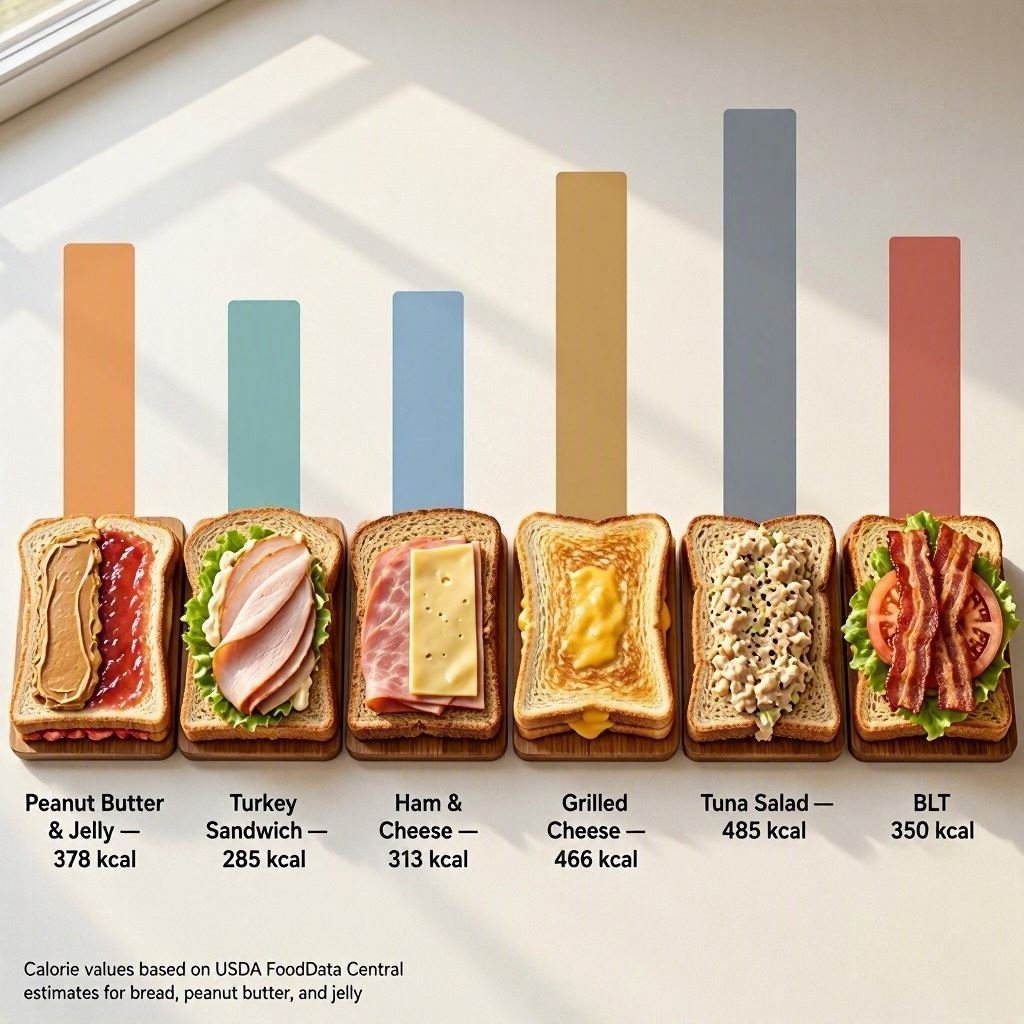
| Sandwich | Calories (approx., 1 sandwich) |
|---|---|
| Turkey sandwich (2 oz turkey, mustard) | ~280 |
| Peanut butter and jelly | ~380 |
| Tuna salad sandwich (mayo-based) | ~400 |
| Grilled cheese (2 slices cheese, butter) | ~440 |
A PB&J lands lighter than a mayo-based tuna salad or grilled cheese, but heavier than a lean turkey sandwich — its calories just come from a very different place (fat and natural sugar rather than added mayo or butter).
Is Peanut Butter and Jelly Good for You?
It depends mostly on portion and what’s in the jar, not on the sandwich concept itself.
Peanut butter brings real nutritional value — it’s a genuine source of protein, fiber, and healthy unsaturated fats, along with vitamin E, magnesium, and potassium. The Cleveland Clinic notes that peanut butter carries most of the same health benefits as whole peanuts, but flags that many commercial brands add sugar and salt that reduce its overall nutritional value compared to a natural, no-sugar-added version.
Jelly, by contrast, is essentially concentrated fruit sugar with little else — it contributes flavor and quick energy but almost no protein, fiber, or micronutrients. That’s not automatically a problem in a normal portion, but it’s worth knowing that the “healthy” part of a PB&J is doing all its work in the peanut butter, not the jelly.
One important safety note: peanut allergy is common and can be severe, even life-threatening. If you’re serving a PB&J to a group or in a school setting, that’s worth keeping in mind regardless of the nutritional angle.
Best Ways to Make a Lower-Calorie PB&J
- Use natural peanut butter — same calorie range as regular, but without the added sugar padding out the nutrition label.
- Go with 1 tablespoon of jelly instead of 2 — you’ll barely notice the difference in taste, and it saves about 50 calories.
- Try thin-sliced or light bread — can cut 40–60 calories without changing the sandwich itself.
- Measure your peanut butter — it’s easy to spread on far more than 2 tablespoons without realizing it; a rounded, generous spread can easily be closer to 3–4 tablespoons.
- Swap in a reduced-sugar jelly if you want to keep the same amount but cut the sugar — most reduced-sugar versions run about half the calories per tablespoon of standard jelly.
Storage and Prep Tips
- Peanut butter keeps well at room temperature for 2–3 months after opening (natural, oil-separating varieties are best kept refrigerated after opening).
- Jelly should be refrigerated after opening and is generally good for 6–12 months, depending on the brand.
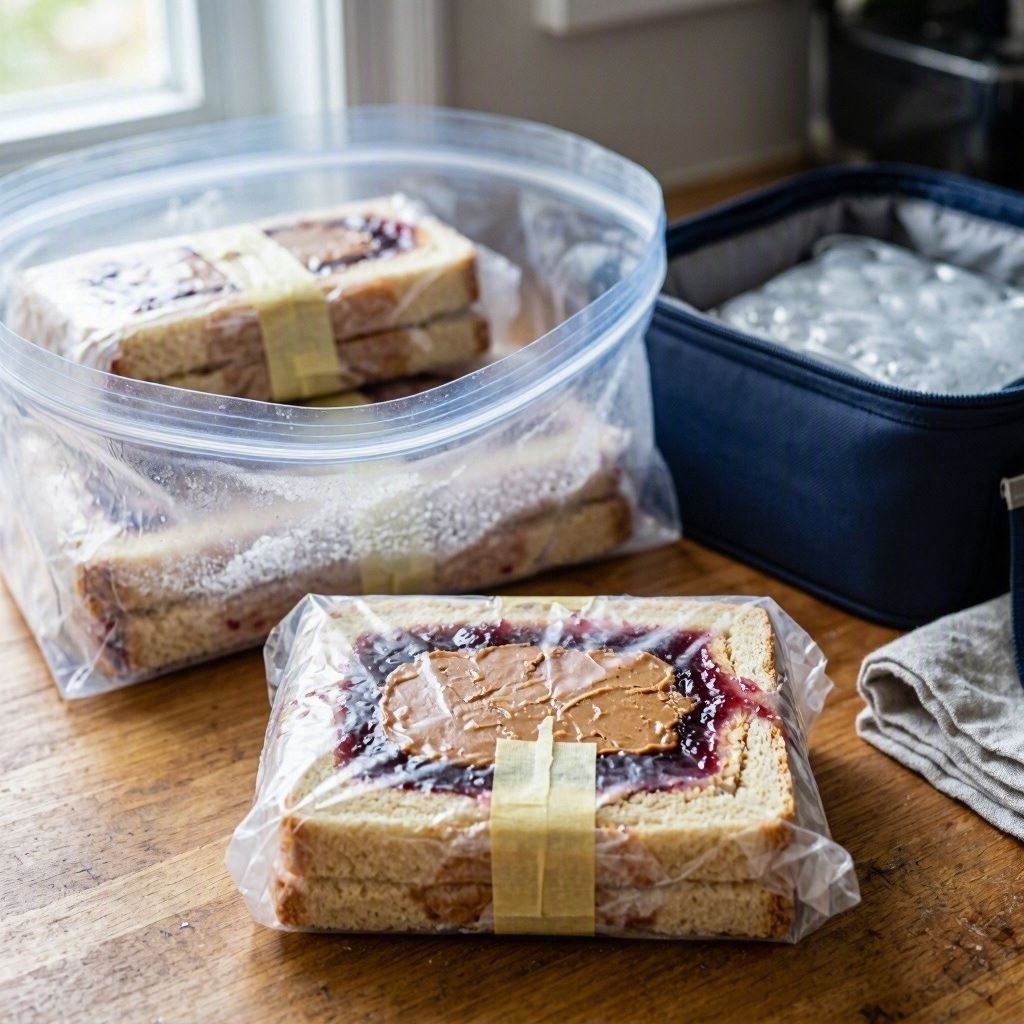
- Made sandwiches freeze surprisingly well — a PB&J can be assembled, wrapped, and frozen for up to 3 months, then thawed at room temperature by lunchtime, a common trick for meal-prepping school or work lunches. (Jelly can make the bread slightly soggier after thawing than eating it fresh, but it’s still perfectly fine to eat.)
FAQ
How many calories are in a peanut butter and jelly sandwich?
A standard PB&J (2 slices bread, 2 tbsp peanut butter, 1 tbsp jelly) has about 380 calories, though this varies quite a bit based on how much peanut butter and jelly you use.
Is peanut butter and jelly good for you?
It depends on portion and ingredients — peanut butter offers real protein, fiber, and healthy fats, while jelly is mostly added sugar. In moderate amounts, a PB&J can fit into a balanced diet.
What has more calories, the peanut butter or the jelly?
Peanut butter, by a wide margin — 2 tablespoons of peanut butter has roughly 190 calories, compared to about 50 calories for 1 tablespoon of jelly.
How can I make a lower-calorie PB&J?
Use natural peanut butter, cut back to 1 tablespoon of jelly instead of 2, and consider thin-sliced or light bread — together these changes can save 100+ calories without much change in taste.
Does the type of bread matter for calories?
Yes — thin-sliced or light breads can save 40–60 calories compared to standard sandwich bread, while thick artisan-style bread can add just as much.
Can I freeze a peanut butter and jelly sandwich?
Yes — a fully assembled PB&J freezes well for up to 3 months and thaws at room temperature in a few hours, a common trick for packed lunches.
Is natural peanut butter lower in calories than regular?
Not usually — the calorie counts are similar tablespoon for tablespoon. The real difference is added sugar and oil, which natural peanut butter generally has less of.
How does a PB&J compare to a grilled cheese in calories?
A standard PB&J (about 380 calories) runs lighter than a typical grilled cheese (about 440 calories), mainly because grilled cheese adds butter and more fat from the cheese itself.
Bottom line: calories in peanut butter and jelly sandwich land around 380 for a standard build, but the real number is really about how much peanut butter and jelly you use — adjust either one and the total moves with it far more than it would for most sandwiches.
Related reading: Calories in Grilled Chicken Breast · Calories in Half Banana · Browse the Calories category
Sources:
- U.S. Department of Agriculture, FoodData Central — Peanut butter
- Cleveland Clinic — 4 Reasons Peanuts Are Good for You
Reviewed by Chloe MacAllister, Certified Sports Nutritionist · Last updated September 1, 2026



 Trudy Banks
 Chloe MacAllister
[…] reading: Calories in Peanut Butter and Jelly Sandwich · Browse the Calories […]