

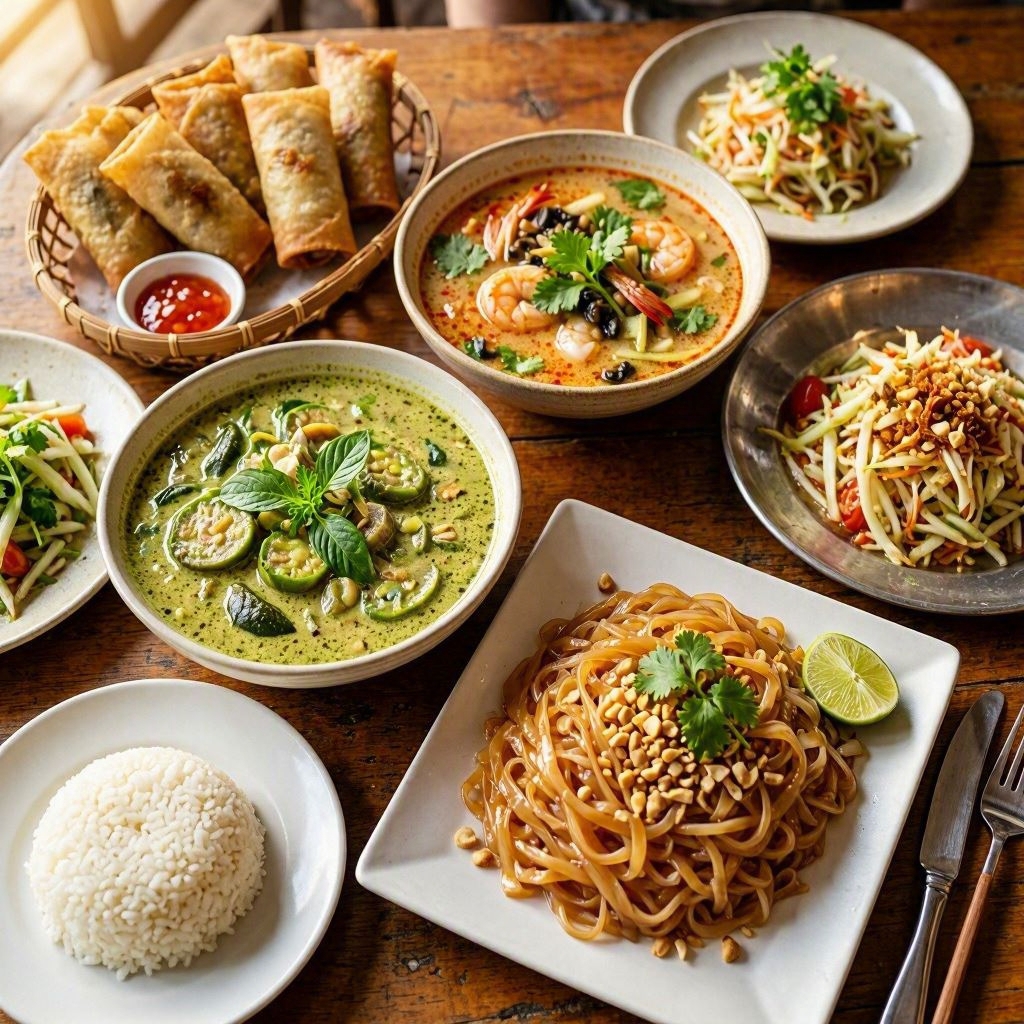
Quick answer: Thai food isn’t inherently fattening — it depends entirely on the dish. A som tam papaya salad or tom yum soup can run under 200 calories, while a coconut-based curry with rice can top 1,000. The dishes that add up fast are the ones built on coconut milk, deep-frying, sugar-heavy sauces, and large portions of white rice; the dishes that stay light lean on fresh vegetables, lime, herbs, and grilled or steamed protein.
So, is Thai food fattening? The answer depends entirely on which dishes you choose — the same menu can have 150-calorie soups and 1,000-calorie curries.
This guide breaks down exactly what drives the calorie count in Thai food, which dishes to watch out for, which ones to order with confidence, and how to enjoy Thai takeout or a restaurant meal without derailing a calorie-conscious diet.
Is Thai Food Fattening? The Short Answer
Thai cuisine, at its roots, is one of the more naturally balanced cuisines in the world — built around fresh herbs, lean proteins like chicken, shrimp, and tofu, and vegetables prepared quickly over high heat. That base is genuinely healthy.
The problem is that a lot of what’s served at Western Thai restaurants isn’t quite the traditional version. Portions tend to be larger, sauces are often sweeter and oilier to suit local taste preferences, and dishes that would traditionally use a light hand with coconut milk or oil get a heavier one. So the honest answer is: Thai food itself isn’t fattening, but specific dishes and specific restaurant habits can be. The cuisine gives you both extremes on the same menu — you just have to know which is which.
What Actually Makes Thai Food Fattening
Four ingredients or techniques are responsible for almost all the calorie spikes in Thai cooking:
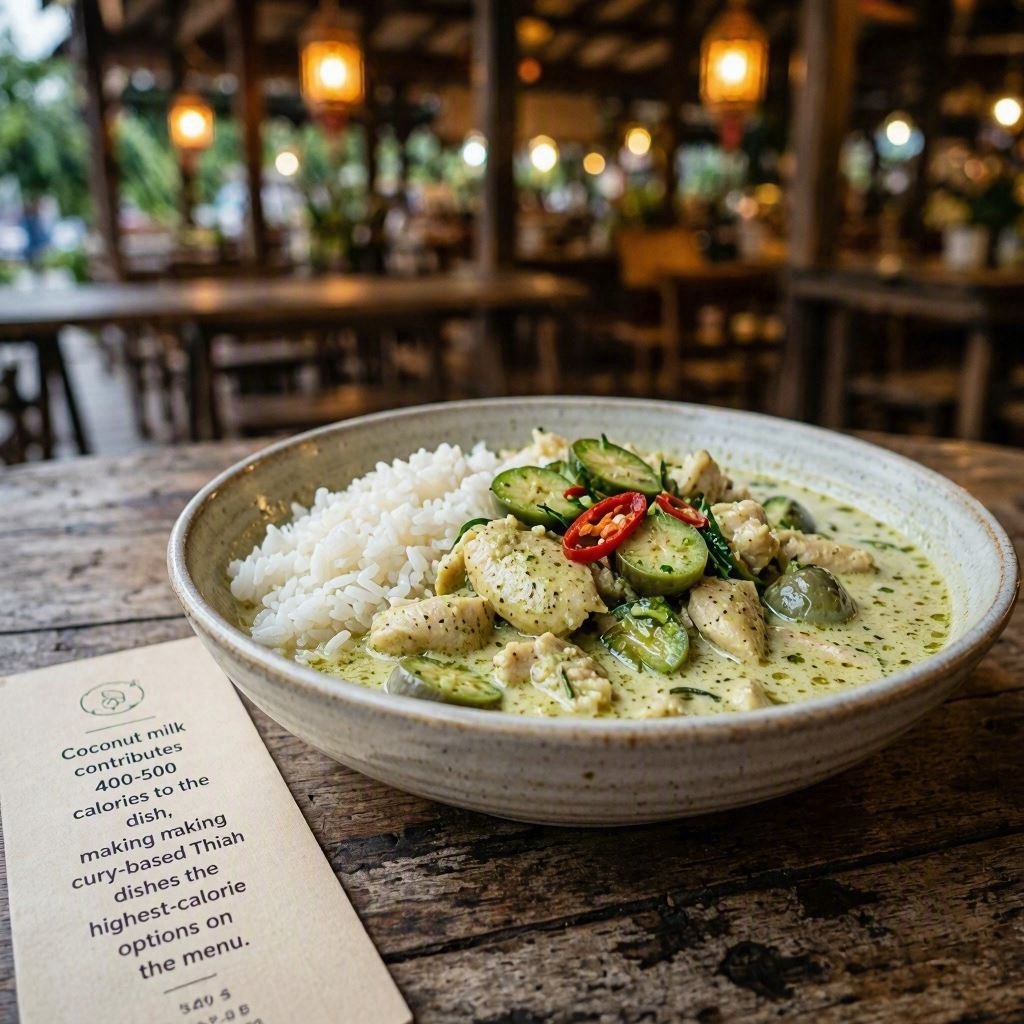
- Coconut milk. A single cup of full-fat coconut milk contains roughly 445 calories and 48g of fat. Curries, some soups, and several desserts use it generously, and it’s the single biggest calorie contributor on a Thai menu.
- Deep-frying. Spring rolls, crispy wontons, fried tofu, and crispy-fried fish or duck absorb significant oil during cooking, roughly doubling their calorie count compared to a steamed or grilled version of the same protein.
- Added sugar. Thai sauces often balance salty, sour, and spicy with a meaningful amount of sugar — pad Thai sauce, sweet chili sauce, and many curry pastes included. It’s subtle because it’s balanced by acidity and heat, so it’s easy to underestimate.
- Rice portions. A typical restaurant serving of white rice can run 400-500 calories on its own, before a single bite of the main dish. Since rice is often served in large, unmeasured portions, it quietly becomes the biggest single item on the plate.
None of these ingredients are “bad” in moderation — coconut milk and rice are both traditional, functional parts of the cuisine. The issue is restaurant-portion scale, not the ingredients themselves.
Calories in Popular Thai Dishes
Here’s how commonly ordered Thai dishes compare, based on a typical restaurant-style serving:
| Dish | Typical Serving | Calories |
|---|---|---|
| Tom yum soup (clear, no coconut) | 1 bowl (~250g) | 90-120 |
| Som tam (green papaya salad) | 1 serving (~200g) | 120-150 |
| Larb (minced meat salad) | 1 serving (~250g) | 250-350 |
| Chicken satay (with peanut sauce) | 4 skewers | 300-400 |
| Pad Thai (chicken or shrimp) | 1 plate (~400g) | 600-800 |
| Green curry with rice | 1 serving with 1 cup rice | 700-900 |
| Massaman curry with rice | 1 serving with 1 cup rice | 800-1,000 |
| Pad see ew | 1 plate (~400g) | 650-750 |
| Spring rolls (fried, 2 pieces) | 2 pieces | 150-200 |
| Fresh summer rolls (2 pieces) | 2 pieces | 100-130 |
| Mango sticky rice | 1 serving | 450-550 |
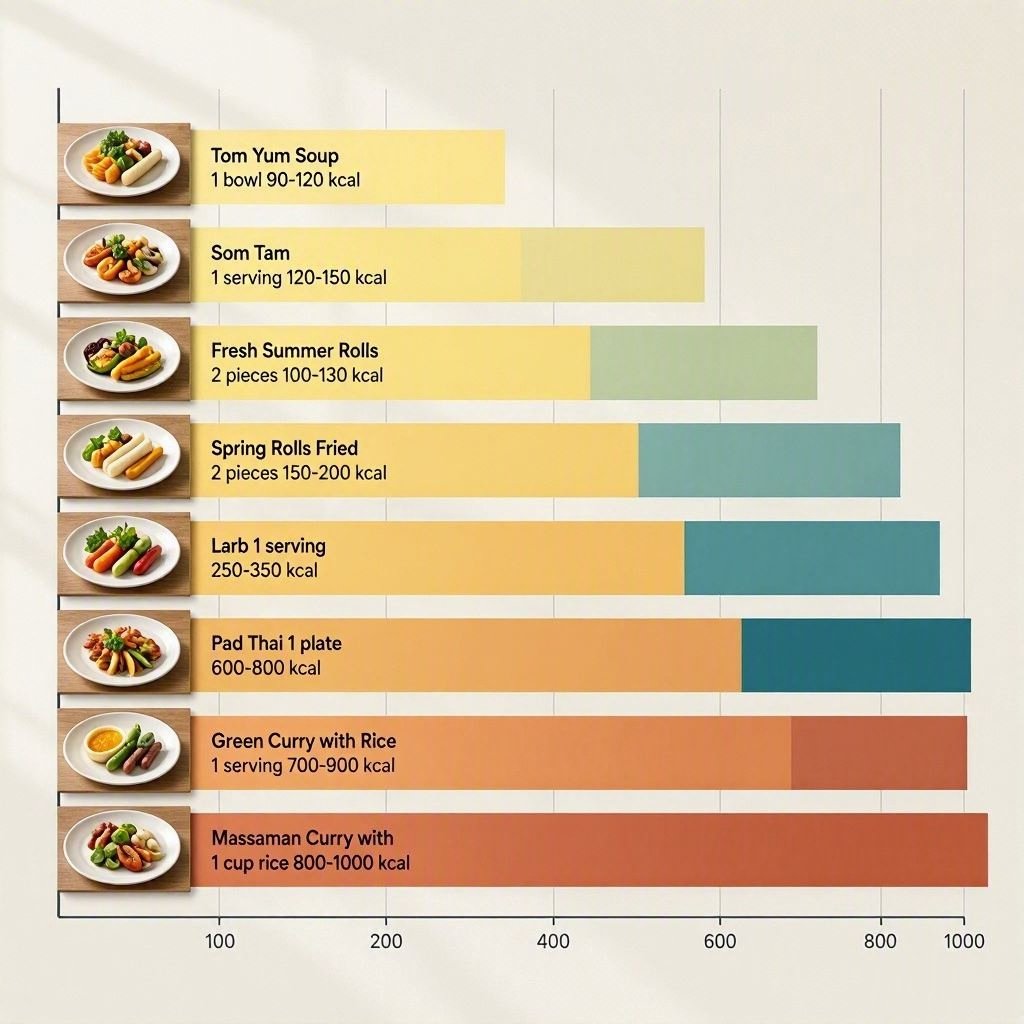
These ranges vary by restaurant — the same dish can differ by a couple hundred calories depending on how generous the kitchen is with oil, sugar, and coconut milk. If you’re tracking closely, treat menu descriptions as a starting estimate, not an exact number.
Low-Calorie Thai Dishes to Order
If you want the flavor of Thai food without the calorie load of a curry-and-rice combo, these dishes consistently come in lighter:
- Tom yum soup — a clear, hot-and-sour broth with lemongrass, lime leaf, and chili. Usually under 150 calories per bowl even with shrimp added.
- Som tam (green papaya salad) — shredded unripe papaya, lime, chili, and fish sauce. Naturally low-calorie and high in fiber.
- Larb (meat salad) — minced chicken, pork, or tofu with lime, herbs, and toasted rice powder. Higher in protein, moderate in calories, and very filling.
- Steamed fish with lime and chili — protein-forward with no added fat beyond the dish’s sauce.
- Fresh (not fried) summer rolls — rice paper wrapped around vegetables, herbs, and sometimes shrimp, served with a light dipping sauce.
- Grilled satay skewers, sauce on the side — the meat itself is lean; most of the calories in satay come from the peanut sauce, so ordering it on the side lets you control the portion.
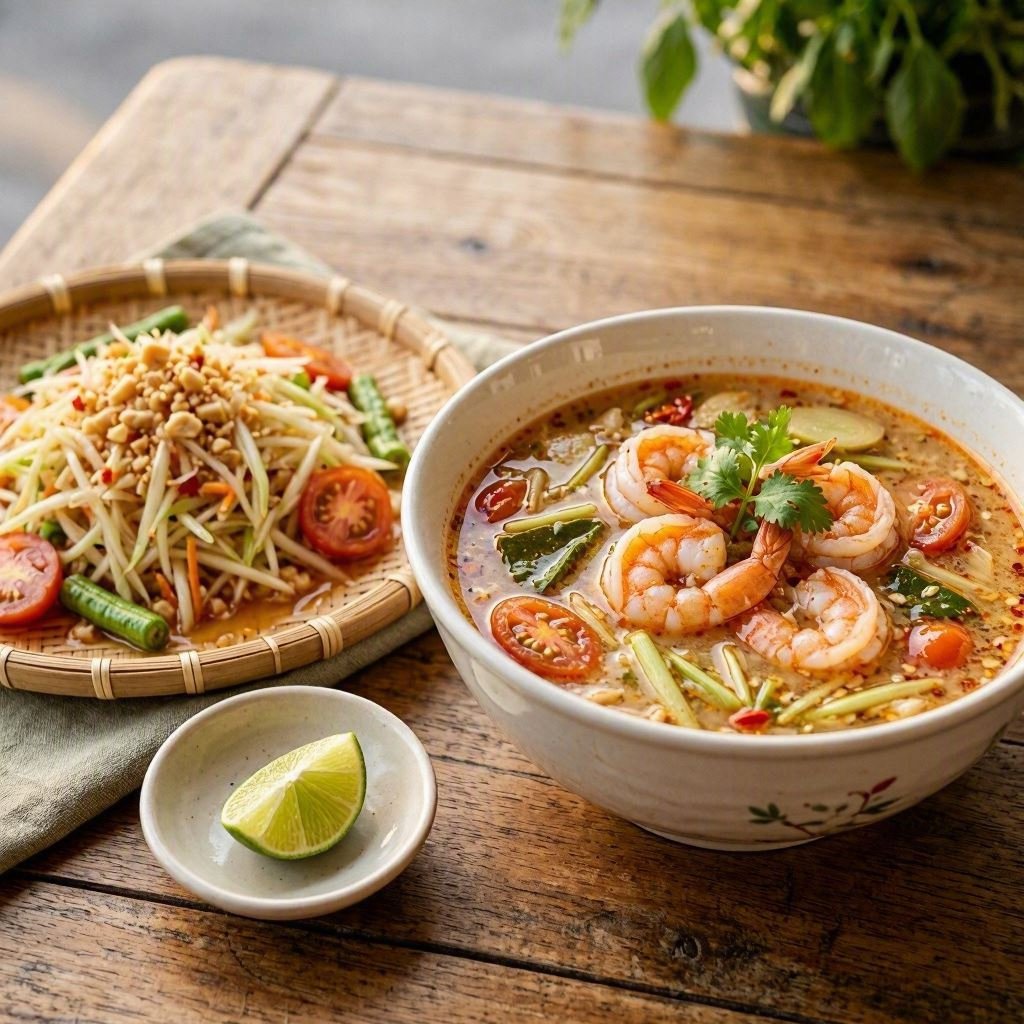
Ordering two or three of these instead of one large curry-and-rice plate often results in a lighter total meal while still feeling like a full, satisfying Thai dinner.
How to Order Thai Food Without Overdoing It
A few small ordering habits make a real difference in the final calorie count of a Thai meal:
- Ask for sauce and dressing on the side. This applies to satay peanut sauce, pad Thai sauce, and salad dressings — you control how much goes on, rather than the kitchen.
- Split or skip the rice. A half portion of rice, or sharing one serving between two people, cuts a meaningful chunk of calories without changing the main dish at all.
- Choose broth-based over coconut-based soups. Tom yum (clear broth) versus tom kha (coconut broth) is a difference of several hundred calories for a similar-sized bowl.
- Pick grilled, steamed, or stir-fried over deep-fried. This one swap — crispy spring rolls to fresh summer rolls, or fried fish to steamed fish — can cut 150-300 calories per dish.
- Watch the curry, not just the protein. A shrimp green curry isn’t automatically lighter than a beef green curry — the coconut milk-based sauce is doing most of the calorie work regardless of which protein sits in it.
- Share family-style. Ordering two or three dishes to split across the table, rather than a full individual plate each, naturally moderates portions without anyone feeling like they’re “on a diet.”

The Health Side of Thai Food
Beyond calories, Thai cuisine has real nutritional strengths worth recognizing. Herbs and aromatics like lemongrass, galangal, Thai basil, and turmeric aren’t just flavor — turmeric’s active compound, curcumin, has been studied for anti-inflammatory properties, and chili peppers contain capsaicin, which some research links to modest increases in metabolic rate and appetite regulation, according to Healthline’s review of Thai food’s nutritional profile.
Vegetables and lean proteins also do a lot of work in traditional Thai cooking. Dishes built around tofu, shrimp, or chicken with a base of chili, lime, and fresh herbs — rather than coconut milk or oil — tend to be genuinely nutrient-dense without the calorie cost. The cuisine isn’t fighting against a health-conscious diet by nature; it’s the Westernized, richer versions of a handful of specific dishes that tip the balance.
Does Thai Food Fit a Weight-Loss Diet?
Thai food can absolutely fit into a weight-management plan — it just requires the same dish-level awareness you’d apply to any cuisine. A meal built around som tam, a broth-based soup, and a lean protein dish is comparable in calories to most “diet-friendly” meals from any cuisine. A meal built around massaman curry, spring rolls, and mango sticky rice can exceed 1,500-2,000 calories in a single sitting.
The advantage Thai food has over a lot of other cuisines is variety — the same menu that has your highest-calorie option also has several genuinely light ones, so you’re rarely stuck choosing between “eat what you don’t want” and “blow your calorie budget.” Knowing which dishes fall where is really the only skill required.
Frequently Asked Questions
Is Thai food more fattening than Chinese or Italian food?
Not inherently — all three cuisines have both light and heavy options. Thai food’s heaviest dishes (coconut curries) are comparable in calorie density to Italian cream sauces or Chinese dishes with heavy oil and sugar-based sauces. The lightest Thai options, like som tam or tom yum, are lighter than most Italian or Chinese equivalents.
What is the lowest-calorie Thai dish to order?
Tom yum soup and som tam (green papaya salad) are typically the lowest-calorie options on a Thai menu, usually landing under 150 calories per serving.
Is pad Thai healthy or fattening?
Pad Thai sits in the middle — a typical restaurant serving runs 600-800 calories, driven mainly by the noodles, oil, and sugar in the sauce. It’s not as heavy as a coconut curry, but it’s not a low-calorie option either.
Why is Thai curry so high in calories?
Most of the calories in Thai curry come from coconut milk, which is high in saturated fat. A curry base alone can contribute 400-500 calories before the protein, rice, or other ingredients are even factored in.
Can I eat Thai food every day and still lose weight?
Yes, if you consistently choose broth-based soups, salads, and grilled or steamed proteins over curries, fried appetizers, and large rice portions. The cuisine offers enough low-calorie options to build a full, satisfying diet around, but it does require choosing deliberately rather than defaulting to the richest items on the menu.
Is brown rice a better choice than white rice with Thai food?
Calorie-wise, brown and white rice are close — both run roughly 200 calories per cooked cup. The real advantage of brown rice is fiber, which can help with fullness and blood sugar response, but it won’t meaningfully change the total calorie count of your meal. If you’re focused purely on calories, the bigger lever is portion size, not which type of rice you choose.
The Bottom Line
Is Thai food fattening? Not by nature — it’s a cuisine with an unusually wide range, from 100-calorie soups to 1,000-calorie curries on the same menu. The dishes to watch are the ones built on coconut milk, deep-frying, sugar-heavy sauces, and oversized rice portions. Lean toward broth-based soups, fresh salads, and grilled or steamed proteins, and Thai food fits comfortably into a calorie-conscious diet without giving up the flavor that makes it worth ordering in the first place.
Related reading: Calories in Grilled Chicken Breast · Low Calories Non Alcoholic Beer · Browse all our Calorie Guides.
Reviewed by Chloe MacAllister, Certified Sports Nutritionist · Last updated September 2026




 Trudy Banks
 Chloe MacAllister