

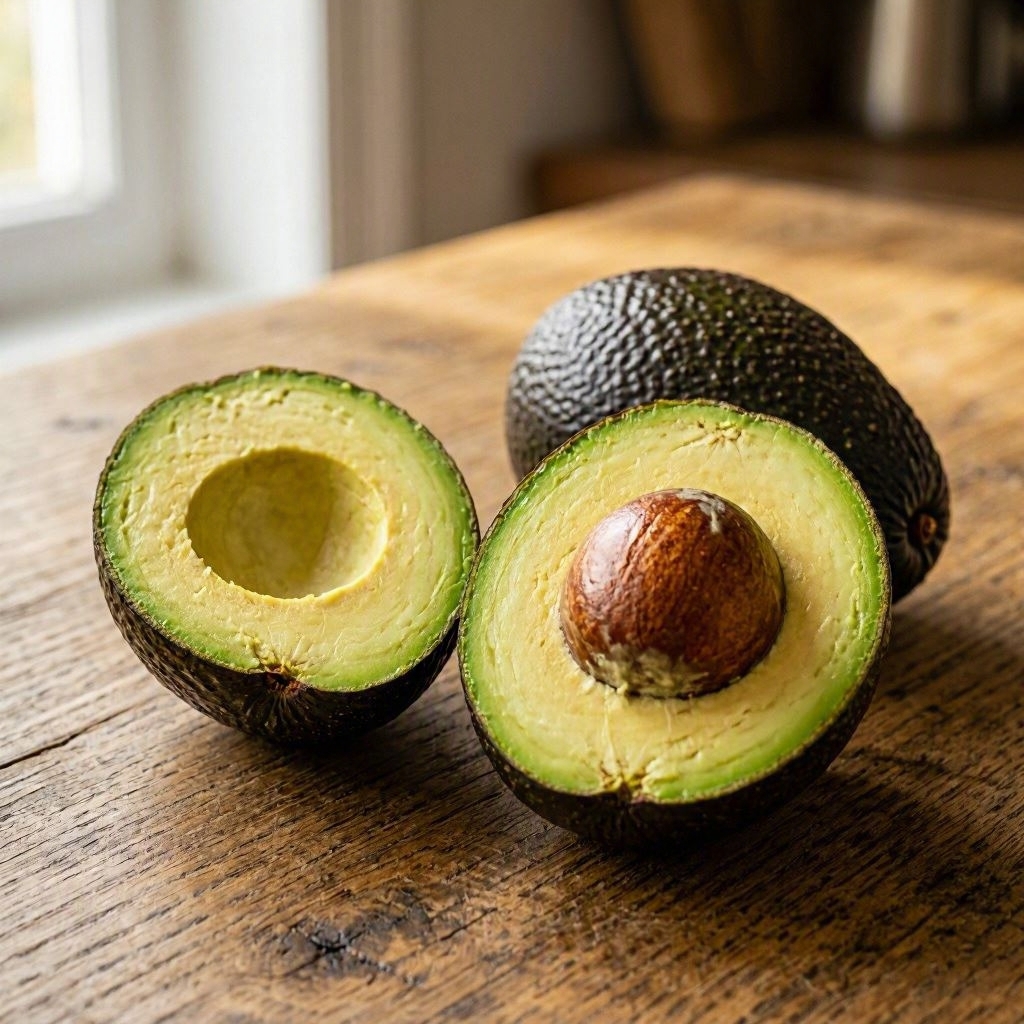
Quick answer: Avocado calories per 100g come to approximately 160 calories, according to USDA nutrition data. Since a medium avocado weighs around 150-200g, that puts a whole avocado somewhere between 240-320 calories, depending on size.
This guide breaks down avocado calories in 100g and other common servings, how avocado compares to other high-fat foods, and how to fit it into a calorie-conscious diet without guesswork.
Avocado Calories Per 100g: The Full Nutrition Profile
A 100g serving of avocado (roughly two-thirds of a medium fruit) contains approximately:
- 160 calories
- 14.7g fat (mostly monounsaturated)
- 8.5g carbohydrates
- 6.7g dietary fiber
- 2g protein
- 0.7g natural sugar
Avocado stands out among fruits for how much of its calorie content comes from fat rather than sugar — about 76% of its calories are from fat, compared to most fruits, which get the majority of their calories from carbohydrates.
Calories by Serving Size
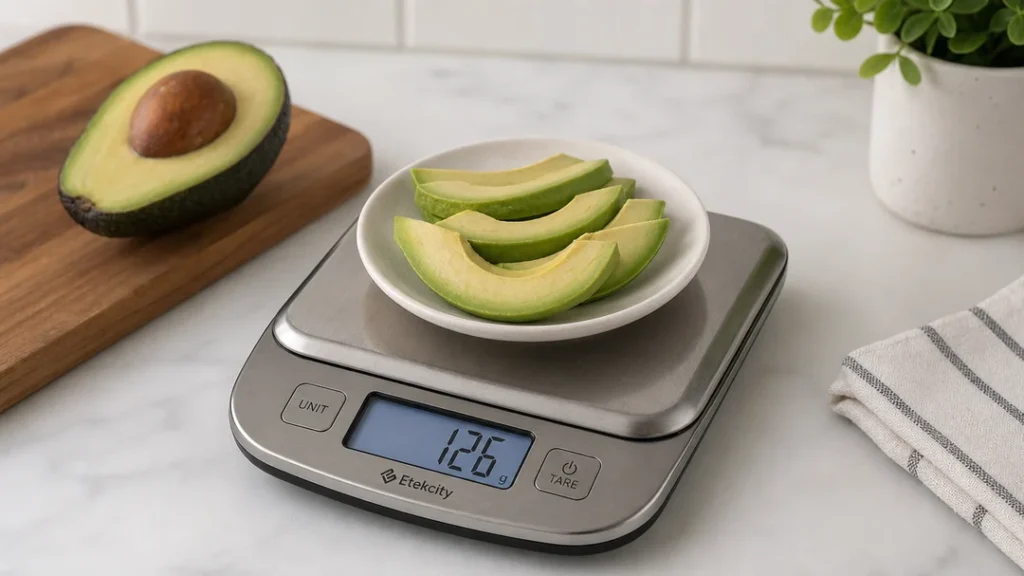
Since few people weigh out exactly 100g, here’s how avocado calories break down by common real-world servings:
| Serving | Weight | Calories |
|---|---|---|
| 1/4 avocado | ~37g | ~60 calories |
| 1/3 avocado (standard serving) | ~50g | ~80 calories |
| 1/2 avocado | ~75g | ~120 calories |
| 1 whole medium avocado | ~150g | ~240 calories |
| 1 cup, cubed | ~150g | ~240 calories |
| 1 tablespoon, mashed | ~15g | ~24 calories |
Avocado size varies more than most produce — a large Hass avocado can weigh considerably more than a small one, so weighing is genuinely more reliable than estimating by “half” or “whole” if precise tracking matters to you.
How Avocado Compares to Other Fats and Spreads
Avocado’s calorie count often gets compared to butter, oils, and other spreads — here’s how it actually stacks up per typical serving:
| Food | Serving | Calories | Fat Type |
|---|---|---|---|
| Avocado | 1/3 (50g) | ~80 | Monounsaturated |
| Butter | 1 tbsp | ~100 | Saturated |
| Mayonnaise | 1 tbsp | ~95 | Mostly polyunsaturated |
| Olive oil | 1 tbsp | ~119 | Monounsaturated |
| Cream cheese | 1 tbsp | ~50 | Saturated |
| Peanut butter | 1 tbsp | ~95 | Mixed |
Gram for gram, avocado is actually similar in calorie density to oil, but a typical serving contains meaningfully fewer calories than an equivalent tablespoon of butter or olive oil, while also delivering fiber and micronutrients those options don’t have.
Health Benefits Worth Knowing
Avocado’s calorie count comes with a genuinely strong nutritional trade-off. Diets that include avocado in place of saturated-fat foods have been associated with improved cardiovascular risk markers, according to Harvard T.H. Chan School of Public Health’s Nutrition Source, largely due to their high monounsaturated fat content and fiber.
- Heart health: The monounsaturated fats in avocado are linked to healthier cholesterol profiles when used in place of saturated fats.
- Fiber: At 6.7g per 100g, avocado is a genuinely strong fiber source, supporting digestion and satiety.
- Potassium: Avocado contains more potassium per serving than a banana, supporting healthy blood pressure.
- Nutrient absorption: The fat in avocado helps the body absorb fat-soluble vitamins (A, D, E, K) from other foods eaten alongside it, like leafy greens in a salad.
Fitting Avocado Into a Calorie-Controlled Diet
Because avocado is more calorie-dense than most fruits and vegetables, portion awareness matters more here than with lower-calorie produce.
- Measure, don’t eyeball: A “half avocado” can range from 90 to 150+ calories depending on size — weighing or using a consistent portion (like 1/3 of a standard avocado) keeps tracking accurate.
- Use it as a fat swap, not an addition: Replacing butter, mayo, or cheese with avocado (rather than adding it on top of those) is where the calorie and health benefits actually show up.
- Pair thoughtfully: Avocado toast with a whole avocado and heavy oil can easily exceed 400-500 calories — portioning to 1/3-1/2 avocado keeps it more reasonable.
- It’s not “free” because it’s healthy: Avocado’s health benefits don’t cancel out its calorie density — it still needs to fit your overall daily total if you’re managing intake closely.
How to Pick and Store Avocado
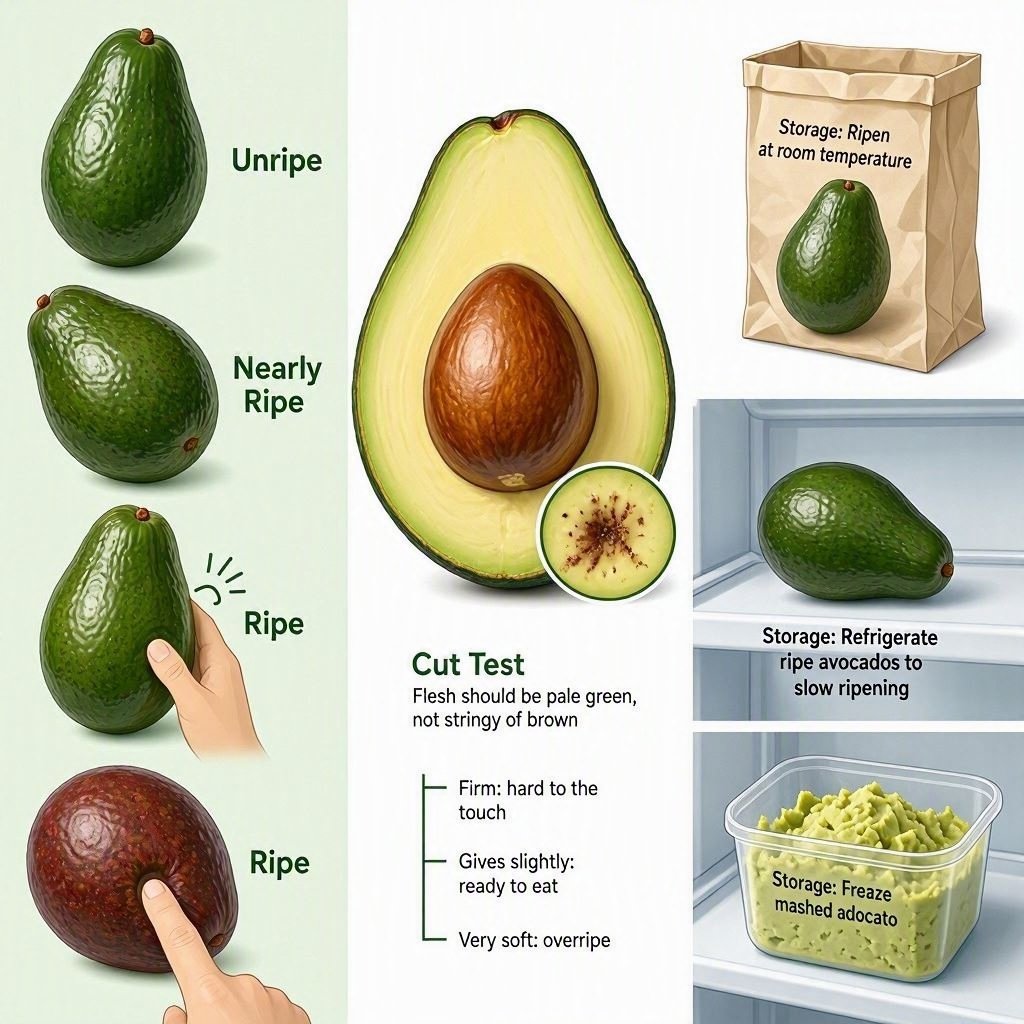
- Choosing ripeness: A ripe avocado yields to gentle pressure without feeling mushy; very firm avocados need a few more days.
- Speed up ripening: Sealing an avocado in a paper bag with a banana can speed ripening by a day or two, thanks to the ethylene gas released.
- Prevent browning: Pressing plastic wrap directly against the cut surface (rather than relying on lemon juice alone) is the most effective way to slow browning on a cut avocado.
- Storage: Whole ripe avocados keep for a few days in the fridge; cut avocado is best used within a day or two, even with proper storage.
Frequently Asked Questions
How many calories are in a whole avocado?
A whole medium avocado (about 150g) contains roughly 240 calories, though this varies with size — larger avocados can run closer to 300+ calories.
Is avocado high in calories compared to other fruits?
Yes — at about 160 calories per 100g, avocado is considerably more calorie-dense than most fruits, which typically range from 30-90 calories per 100g. This is because avocado gets most of its calories from fat rather than carbohydrates.
How many calories are in avocado toast?
This depends heavily on portion and toppings, but a slice of whole-grain toast with 1/2 avocado and a light seasoning typically runs 200-250 calories; adding oil, cheese, or a full avocado can push it toward 400-500 calories.
Does avocado help with weight loss?
Avocado can fit well into a weight-loss-focused diet due to its fiber and healthy fat content supporting satiety, but its calorie density means portion control matters more than with lower-calorie produce. It’s not a “free” food, even though it’s nutrient-dense.
How many calories are in guacamole?
A 1/4 cup serving of basic guacamole (mostly avocado, lime, and seasoning) runs approximately 90-100 calories, though calorie content rises with added ingredients like sour cream, cheese, or extra oil.
The Bottom Line
Avocado calories per 100g come to roughly 160 — more calorie-dense than most fruits, but backed by a genuinely strong nutritional profile of fiber, monounsaturated fat, and potassium. Portion awareness matters more with avocado than with lower-calorie produce, but used as a swap for less healthy fats rather than an addition on top, it fits well into a balanced, calorie-conscious diet.
Related reading: How Many Calories in a Strawberry? · How Many Calories Does a Green Grape Have? · Browse all our Calorie Guides.
Reviewed by Chloe MacAllister, Certified Sports Nutritionist · Last updated August 2026





 Trudy Banks
 Chloe MacAllister