

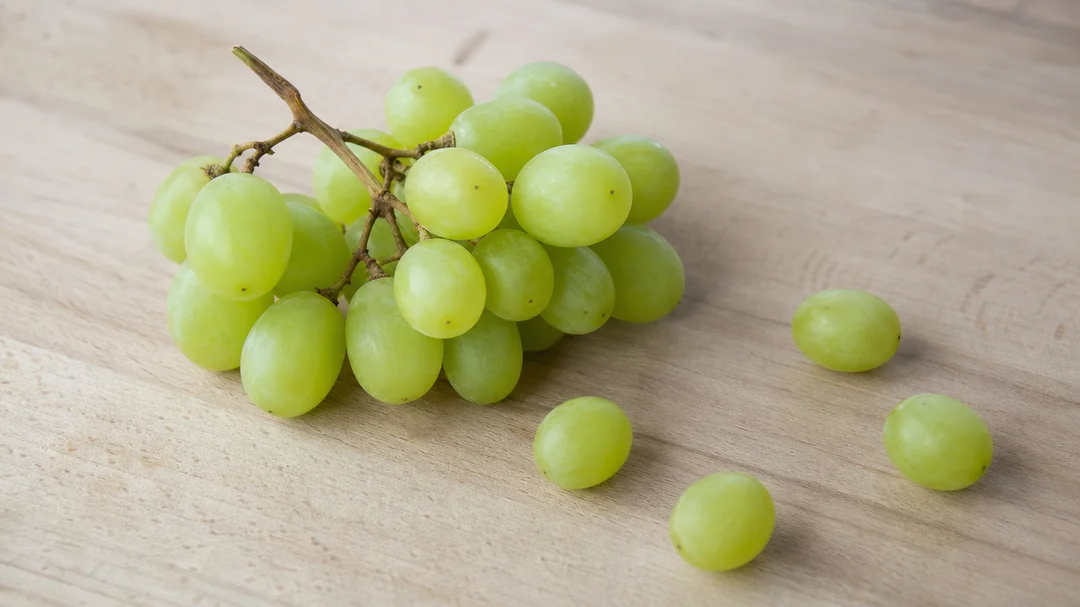
Quick answer: How many calories does a green grape have? A single medium green grape contains roughly 3 calories, and a full cup of green grapes (about 151g) contains around 104 calories. Grapes are naturally low in calories per piece, though the count adds up quickly since it’s easy to eat a large handful without noticing.
This guide breaks down exactly how many calories are in a green grape by size and serving, how green grapes compare to red, and where they fit into a balanced diet.
How Many Calories Does a Green Grape Have by Serving Size
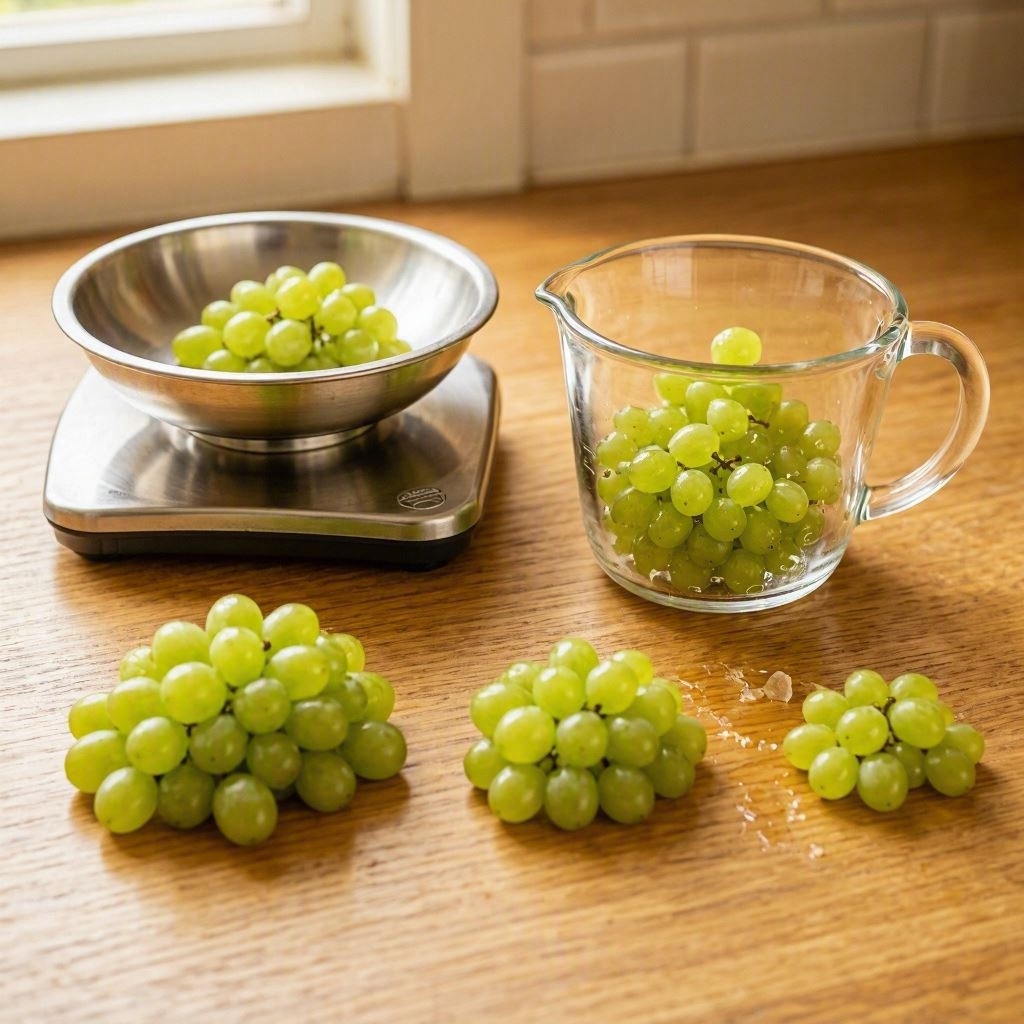
Since grapes are rarely eaten one at a time, here’s how the calorie count breaks down across common real-world servings:
| Serving | Weight | Calories |
|---|---|---|
| 1 grape | ~5g | ~3 calories |
| 10 grapes | ~50g | ~34 calories |
| 20 grapes | ~100g | ~69 calories |
| 1/2 cup | ~75g | ~52 calories |
| 1 cup | ~151g | ~104 calories |
| Small bunch (~20 grapes) | ~120g | ~80 calories |
Grape size varies noticeably by variety — Thompson seedless grapes tend to run smaller than table grapes like Cotton Candy or Concord — so these figures are solid estimates rather than exact numbers for every grape you’ll encounter.
Green Grapes Per 100g
So exactly how many calories does a green grape have per 100 grams? Per the USDA FoodData Central database, raw green grapes contain approximately:
- 69 calories per 100g
- 18.1g carbohydrates
- 0.9g dietary fiber
- 15.5g natural sugar
- 0.7g protein
- 0.2g fat
Almost all of a grape’s calories come from natural sugar, which is part of why they taste as sweet as they do despite being relatively low-calorie per piece.
Green Grapes vs. Red Grapes: Any Calorie Difference?
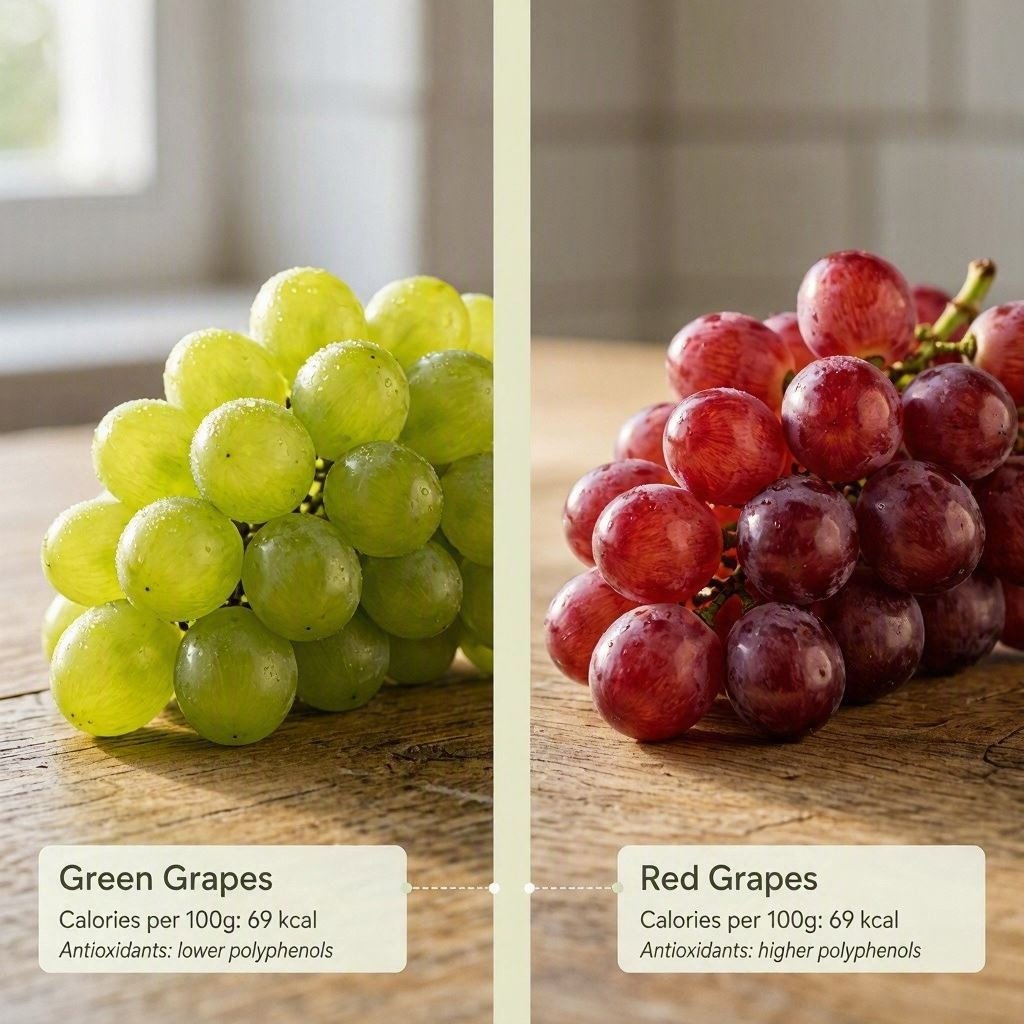
Not meaningfully. The USDA groups red and green grapes together in most databases because their calorie, sugar, and fiber content don’t differ in any significant way — both land around 67-69 calories per 100g. The real difference is in antioxidant profile: red and purple grapes get their color from anthocyanins, while green grapes contain their own mix of protective plant compounds like quercetin and kaempferol. Neither color has a calorie advantage over the other — it comes down to taste preference and slightly different antioxidant types.
Health Benefits Worth Knowing
Beyond their calorie count, green grapes bring some genuine nutritional value:
- Vitamin K: Supports bone health and blood clotting function.
- Vitamin C: Contributes to immune support, though in smaller amounts than citrus fruits.
- Antioxidants: Grapes contain polyphenols, including resveratrol (found mainly in the skin), linked to heart health support in research.
- Hydration: Grapes are roughly 81% water, contributing to their refreshing quality and relatively low calorie density.
- Fiber: A modest amount, which supports digestion, though not as high as some other fruits.
Fitting Grapes Into a Calorie-Controlled Diet
Grapes are easy to build into a diet, but their calorie count can sneak up faster than lower-density fruits like strawberries, simply because they’re easy to eat in large handfuls without noticing.
- Portion awareness matters: A “handful” can easily be 20-30 grapes without realizing it — using a small bowl or pre-portioning helps keep servings in check.
- Frozen grapes: Freezing grapes doesn’t change their calorie content, but it does slow down how quickly they’re eaten, which can help with portion control naturally.
- Pairing: Grapes pair well with a small amount of cheese or nuts for a more balanced snack, rather than eating them alone in large quantities.
- Diabetes consideration: Grapes have a moderate glycemic index; portioning to about a cup or less at a time helps avoid a sharp blood sugar spike, particularly for anyone managing blood sugar.
Grapes vs. Other Popular Snacks (Calorie Comparison)
Wondering how many calories does a green grape have compared to your usual snack options? Here’s how the numbers stack up:
| Snack | Serving | Calories |
|---|---|---|
| Green grapes | 1 cup (151g) | ~104 |
| Pretzels | 1 oz (~28g) | ~108 |
| Potato chips | 1 oz (~28g) | ~152 |
| Baby carrots | 1 cup (~128g) | ~52 |
| Crackers (plain) | 1 oz (~28g) | ~120 |
| Almonds | 1 oz (~28g, ~23 almonds) | ~164 |
Compared to most packaged snacks, a cup of grapes offers a similar or lower calorie count, plus fiber, water content, and micronutrients that processed snacks typically lack.
Frequently Asked Questions
How many calories are in 10 green grapes?
Ten green grapes (about 50g) contain roughly 34 calories, though this varies somewhat depending on grape size and variety.
Are green grapes good for weight loss?
Green grapes can fit into a weight-loss-focused diet due to their water content and natural sweetness, but their sugar content means portion control matters more than with lower-sugar fruits. Pre-portioning servings helps avoid accidentally eating a much larger amount than intended.
How many calories are in a bunch of green grapes?
A small bunch of roughly 20 grapes (about 120g) contains around 80 calories, while a larger bunch can easily contain 150+ calories depending on size.
Do green grapes have more or fewer calories than red grapes?
Essentially the same — green and red grapes have nearly identical calorie counts per 100g. The main differences between them are in taste and antioxidant type, not calorie content.
How many calories are in green grape juice compared to whole grapes?
Grape juice is significantly more calorie-dense per serving than whole grapes, since juicing removes the fiber that helps you feel full, while concentrating the natural sugar. A cup of grape juice typically contains more calories than a cup of whole grapes.
How to Store Grapes to Keep Them Fresh Longer
- Refrigerate unwashed: Wash grapes right before eating, not before storing — excess moisture speeds up spoilage.
- Keep them in a ventilated container: The original perforated bag or a container with airflow helps grapes last 1-2 weeks in the fridge.
- Freeze for longer storage: Frozen grapes keep for several months and make a naturally sweet, portion-controlled snack straight from the freezer.
- Check for shriveling: Slightly softer or wrinkled grapes are still generally safe to eat but are past peak freshness — best used quickly rather than stored longer.
The Bottom Line
So, how many calories does a green grape have? A single grape contains only about 3 calories, but a full cup adds up to around 104 — meaning portion size matters more with grapes than with lower-density fruits. They’re a genuinely healthy, hydrating snack, as long as you keep an eye on how much you’re actually eating in one sitting.
Looking for more? Browse all our Calorie Guides.
Reviewed by Chloe MacAllister, Certified Sports Nutritionist · Last updated August 2026






 Trudy Banks
 Chloe MacAllister