

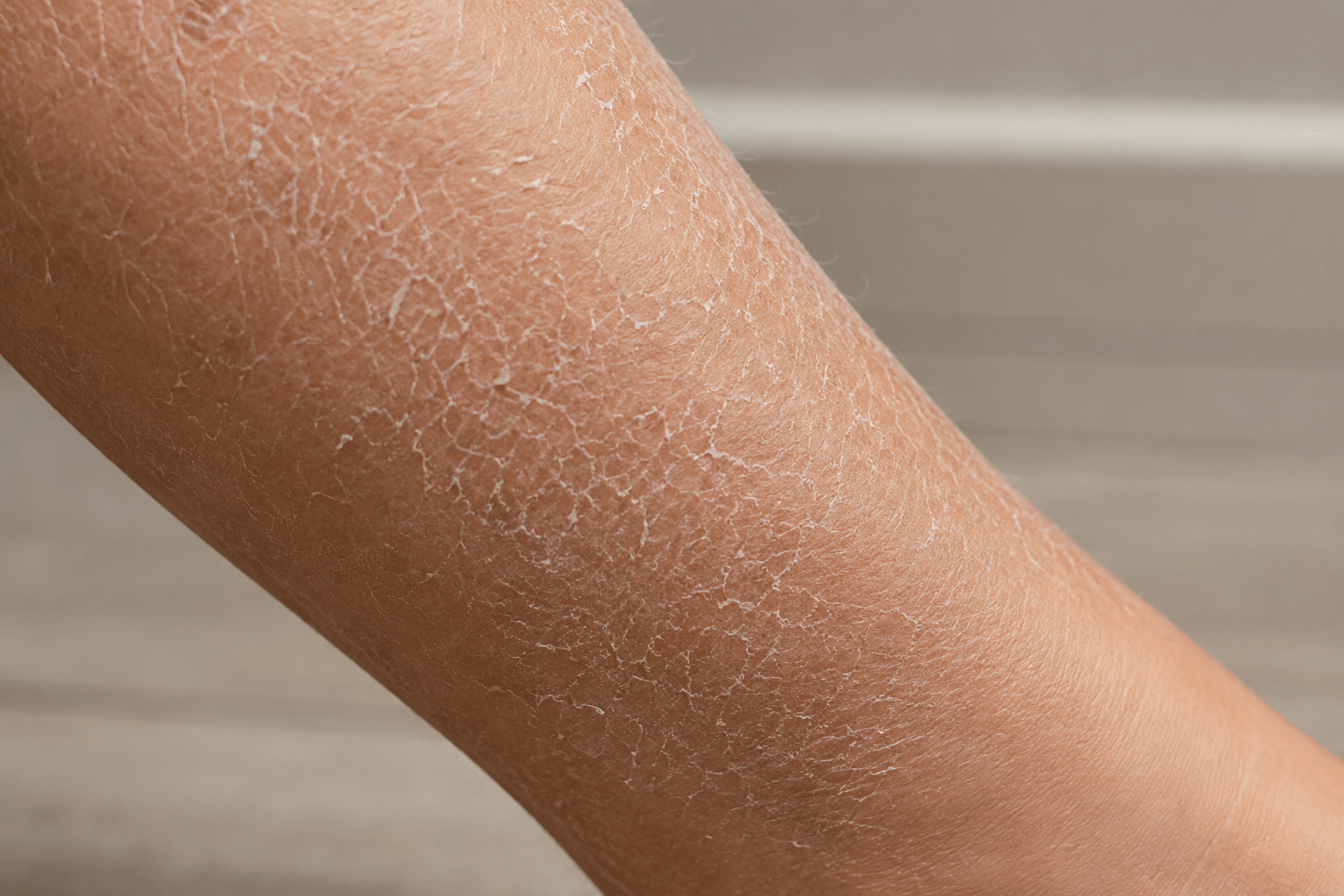
So, what causes dry skin on the legs? In most cases it’s hot showers, harsh soap, low humidity, and aging skin — all of which strip the legs’ naturally low oil supply. Less commonly, it’s a sign of eczema, psoriasis, diabetes, or thyroid issues, which need a dermatologist rather than just moisturizer.
If the skin on your legs feels tight, rough, flaky, or itchy — especially around your shins — you’re dealing with one of the most common skin complaints out there. For most people, dry skin on the legs is nothing serious: legs have fewer oil glands than most other parts of the body, which makes them naturally more prone to dryness than your face or torso. But “common” doesn’t always mean “harmless,” and persistent or worsening dry, itchy legs can sometimes point to something that needs more than a bottle of lotion.
This guide, reviewed by a licensed beautician, walks through the most common causes of dry skin on the legs, how to tell ordinary dryness apart from something that needs medical attention, and what actually helps.
What Causes Dry Skin on the Legs? Why Legs Are More Prone to Dryness
Before getting into individual causes, it helps to understand why legs specifically tend to dry out. The skin on your lower legs has fewer sebaceous (oil-producing) glands than your face, scalp, or upper body, according to the American Academy of Dermatology. Less natural oil means less natural protection against moisture loss — so legs are often the first place dryness shows up, and the last place it goes away.
This also means legs are more sensitive to anything that strips moisture further: hot water, harsh soap, dry air, and friction from clothing all affect legs more visibly than most other areas.
Causes of Dry Skin on the Legs at a Glance
| Cause | Key Signs | What Helps |
|---|---|---|
| Hot showers/baths | Tightness right after washing | Lukewarm water, moisturize while damp |
| Harsh soap/body wash | Dryness worsens after washing | Fragrance-free, soap-free cleanser |
| Low humidity/cold weather | Seasonal flaking, worse in winter | Humidifier, richer moisturizer |
| Aging skin | Gradual dryness after ~40 | Emollient creams over light lotions |
| Dehydration | Dryness plus general fatigue/thirst | Consistent water intake |
| Sun exposure | Rough texture on exposed skin | Daily SPF |
| Shaving without prep | Dryness + irritation, micro-cuts | Shave after shower, moisturizing shave cream |
| Eczema | Intense itching, redness, flare-ups | Dermatologist-guided management |
| Psoriasis | Thick, scaly, silvery patches | Dermatologist evaluation |
| Diabetes-related | Slow-healing, numbness/tingling | Medical evaluation |
| Thyroid conditions | Dryness + fatigue, weight changes | Medical evaluation |
| Medications | Started after new prescription | Discuss with doctor/pharmacist |
1. Hot Showers and Baths
Long, hot showers feel great, but hot water breaks down the skin’s natural oil barrier faster than warm or cool water does. The longer and hotter the shower, the more that barrier gets stripped — which is why dry skin on the legs can feel tighter right after washing, not before.
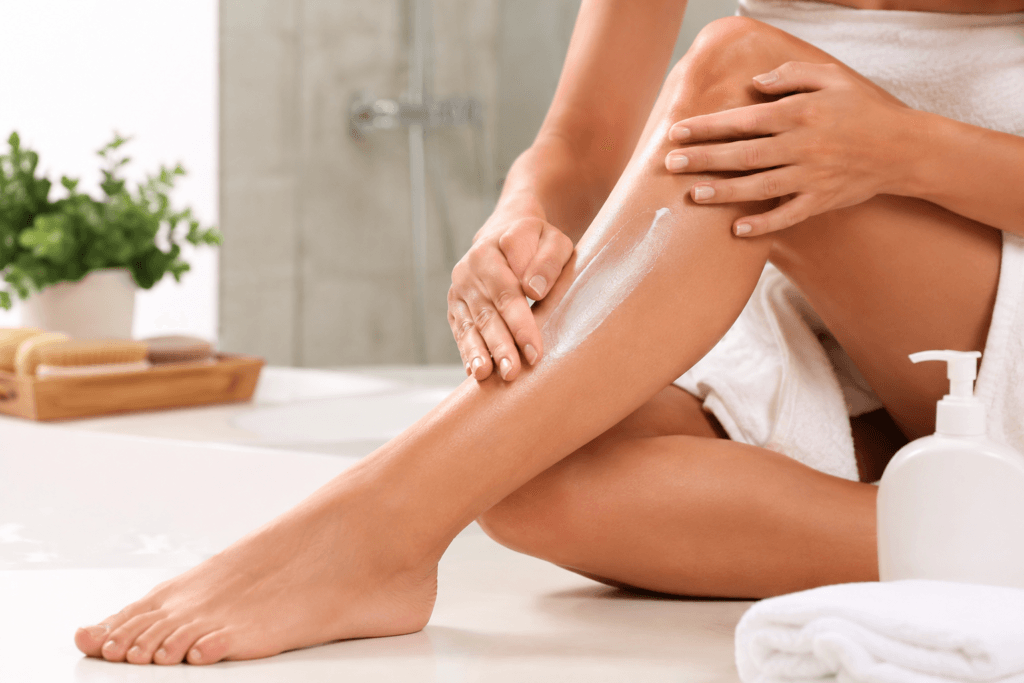
What helps: Keep showers under 10 minutes, use lukewarm rather than hot water, and apply moisturizer within a few minutes of stepping out, while skin is still slightly damp. This locks in more moisture than applying lotion to fully dry skin.
2. Harsh Soaps and Body Washes
Many bar soaps and body washes contain sulfates and strong detergents designed to cut through oil — which also strips the oil your skin actually needs. Heavily fragranced products can make dry, itchy legs worse, especially on skin that’s already compromised.
What helps: Switch to a fragrance-free, soap-free cleanser labeled “for sensitive skin” or “moisturizing.” Ingredients like glycerin or ceramides in a cleanser help rather than hurt.
3. Low Humidity and Cold Weather
Dry air pulls moisture out of skin, which is why dry, flaky skin on legs is especially common in winter or in climates with low humidity, and in homes with central heating running constantly. Indoor heating in particular can drop indoor humidity dramatically.
What helps: A humidifier in the bedroom, especially overnight, can make a noticeable difference. Layering a heavier moisturizer or an occlusive product (like one containing petrolatum) at night also helps hold moisture in.
4. Aging Skin
As skin ages, oil production naturally slows down and the skin’s ability to retain moisture decreases. This is a big part of why dry legs become more common — and more stubborn — after age 40 or so, even for people who never had dry skin issues before.
What helps: Richer, more emollient moisturizers (creams and ointments rather than light lotions) tend to work better for aging skin than they did in younger years.
5. Dehydration
Not drinking enough water affects skin from the inside as well as the outside. While hydration alone won’t fix dry skin caused by other factors, chronic mild dehydration can make any existing dryness more pronounced.
What helps: This one’s straightforward — consistent water intake throughout the day, not as a cure-all, but as one piece of the picture.
6. Excessive Sun Exposure
UV exposure damages the skin’s outer barrier over time, leading to rougher, drier texture — separate from sunburn itself. This kind of damage builds up gradually and is often more visible on legs that get regular sun exposure without protection.
What helps: Daily SPF on exposed skin, even on legs, helps prevent this type of cumulative dryness and damage.
7. Shaving Without Proper Prep
Shaving dry, or using a dull razor, physically removes a thin layer of skin along with the hair, which can leave skin more prone to dryness, irritation, and micro-cuts.
What helps: Shave after a few minutes in the shower (skin is softer), use a shaving cream or conditioner rather than plain soap, and replace razors regularly.
8. Eczema (Atopic Dermatitis)
Eczema is a chronic skin condition that causes patches of dry, itchy, sometimes inflamed or cracked skin — commonly on the legs, especially behind the knees and on the shins, per the National Eczema Association. Unlike ordinary dryness, eczema often comes with intense itching, redness, and flare-ups that come and go, sometimes triggered by stress, allergens, or weather changes.
Eczema has no cure, but it’s very manageable with the right approach — typically a combination of gentle skincare, avoiding personal triggers, and, for moderate to severe cases, prescription treatment from a dermatologist. If dryness on your legs is intensely itchy, red, or keeps recurring in the same spots, this is worth bringing up with a doctor rather than treating with moisturizer alone.

Affiliate disclosure: some readers also look into additional at-home management guides, such as Eczema Free You (affiliate link — we may earn a commission at no cost to you), alongside medical care — though nothing replaces an actual diagnosis.
9. Psoriasis
Psoriasis causes thicker, scalier patches than typical dry skin, often with a distinct silvery or white buildup, and commonly appears on the shins, knees, and elbows, according to the Mayo Clinic. It’s an autoimmune condition, not a moisture issue, and needs a dermatologist’s evaluation for proper treatment — over-the-counter moisturizer won’t resolve it on its own.
10. Diabetes-Related Skin Changes
High blood sugar can affect circulation and nerve function in ways that make skin, especially on the lower legs, more prone to dryness, and slower to heal from cracks or cuts, per the American Diabetes Association. This is one of the more important causes to rule out, since skin changes are sometimes an early sign of blood sugar issues in people who haven’t been diagnosed yet.
When to see a doctor: If dry, cracked, or slow-healing skin on your legs is a new or worsening pattern — especially combined with numbness, tingling, or slow wound healing — it’s worth mentioning to a physician.
11. Thyroid Conditions
An underactive thyroid (hypothyroidism) slows down several body processes, including oil gland activity and skin cell turnover, which can lead to skin that’s dry, rough, and slow to improve no matter what you put on it. Other signs often accompany this, like fatigue or unexplained weight changes.
12. Certain Medications
Some medications — including diuretics, statins, and certain acne treatments (like oral retinoids) — list dry skin as a known side effect. If dryness started around the same time you began a new medication, that timing is worth noting for your doctor or pharmacist.
Ordinary Dry Skin vs. Something That Needs a Doctor
Most dry skin on the legs is manageable at home and improves with better skincare habits. But it’s worth seeing a dermatologist or doctor if you notice:
- Intense itching that disrupts sleep or daily life
- Skin that’s cracked, bleeding, or oozing
- Redness, swelling, or warmth (possible signs of infection)
- Patches that don’t improve after a few weeks of consistent moisturizing
- Dryness that appeared suddenly alongside other new symptoms (fatigue, weight change, increased thirst)
None of these are things a moisturizer, however good, is designed to fix — they need an actual diagnosis.
How to Treat and Prevent Dry Skin on the Legs
For the everyday, non-medical causes above, a few consistent habits make the biggest difference in treating dry skin on the legs:
- Moisturize right after showering, while skin is still damp, using a cream or ointment rather than a thin lotion
- Use lukewarm water and keep showers shorter
- Choose fragrance-free, gentle cleansers instead of heavily scented soap
- Exfoliate gently, no more than once or twice a week, to help moisturizer absorb better — over-exfoliating can make dryness worse
- Run a humidifier during dry months or in dry climates
- Wear breathable fabrics and avoid rough materials that cause friction against dry skin
- Apply SPF to legs when they’re exposed to the sun for extended periods
Best Ingredients to Look For (and What to Avoid)
Not all moisturizers work the same way, and picking the right one matters more than how much you apply.
Look for:
- Ceramides — help rebuild the skin’s natural barrier, which is often what’s actually damaged in chronic dry skin
- Hyaluronic acid — draws moisture into the skin; works best applied to damp skin
- Glycerin — a reliable humectant found in most effective moisturizers
- Shea butter or petrolatum — occlusive ingredients that seal in moisture, especially useful at night
- Colloidal oatmeal — soothing for skin that’s dry and itchy, not just dry
Avoid or limit:
- Added fragrance, especially on already-irritated skin
- Alcohol-based products (some toners and sprays), which can be drying
- Long, hot showers combined with heavy exfoliation — this combination strips the barrier faster than either alone
A Simple Daily Routine for Dry Legs
If you’re not sure where to start, this basic routine covers most of the everyday causes of dry skin on the legs listed above:
- Morning: Apply a lightweight, ceramide- or hyaluronic-acid-based lotion after your shower, while skin is still slightly damp.
- Daytime: Apply SPF if legs will be exposed to sun for more than a few minutes.
- Evening: After a lukewarm (not hot) shower, pat skin mostly dry and apply a richer cream or ointment within a few minutes, while some moisture is still on the skin.
- Weekly: Gentle exfoliation once or twice a week — a soft washcloth or mild chemical exfoliant is usually enough; skip physical scrubs if skin is already irritated.
Consistency matters more than any single product. Most people see noticeable improvement within one to two weeks of sticking to a routine like this, assuming the underlying cause is one of the everyday factors rather than a medical condition.
Related reading: Best Cream for Seborrheic Dermatitis on Face · Skin Tips for Clear Skin
Frequently Asked Questions
Why are my legs drier than the rest of my body? Legs have fewer oil-producing glands than most other areas of skin, so they lose moisture faster and show dryness sooner — especially on the shins, where skin is thinner and gets more friction from clothing.
Is dry skin on the legs a sign of a vitamin deficiency? It can be, in some cases. Deficiencies in vitamin D, vitamin A, or essential fatty acids have been associated with drier skin, though this is far less common than everyday causes like hot showers or dry air. If dryness persists despite good skincare habits and you suspect a deficiency, it’s worth discussing with a doctor rather than guessing with supplements.
Why does my dry skin get worse at night? This is often less about the skin itself and more about noticing it more — itching tends to feel more intense when there are fewer distractions, and bedding or pajama fabric can add friction. It can also genuinely worsen overnight in centrally heated bedrooms with low humidity.
Can drinking more water fix dry skin on the legs? Hydration supports overall skin health, but it won’t resolve dryness caused by hot showers, harsh soap, weather, or an underlying skin condition on its own. Think of it as one supporting habit, not a fix by itself.
How long does it take for dry skin to improve? For everyday causes, most people notice softer, less flaky skin within one to two weeks of consistent moisturizing and gentler showering habits. If there’s no improvement after a few weeks of a solid routine, that’s a reasonable point to check in with a dermatologist.
Should I stop shaving if my legs are dry? Not necessarily — but shaving dry skin, or using a dull razor, does make dryness worse. Shaving after a few minutes in a warm (not hot) shower, using a moisturizing shave product, and replacing razors regularly all help reduce the irritation shaving can cause.
The Bottom Line
Dry skin on the legs is usually just a byproduct of biology (fewer oil glands) plus everyday habits (hot showers, dry air, harsh soap) — and it typically responds well to simple changes. But because a handful of the causes are underlying health conditions, persistent or unusual dryness deserves a second look rather than an assumption that “it’s just dry skin.” When in doubt, a quick visit to a dermatologist is a better first step than experimenting with product after product.
Reviewed by Trudy Banks, Licensed Beautician · Last updated August 2026






 Trudy Banks
 Chloe MacAllister