


Looking for skin tips for clear skin that actually hold up, not just trending routines that disappear in a month? The truth is, clear skin usually comes down to a small number of consistent habits, not an ever-growing shelf of products. This guide covers 10 dermatologist-backed steps, reviewed by a licensed beautician, that genuinely move the needle — plus what to do if breakouts persist despite doing everything right.
Why Consistency Matters More Than Product Count
One of the most common mistakes in any clear skin routine is treating it like a shopping list instead of a habit. Skin cell turnover takes weeks, not days — the American Academy of Dermatology notes that a simple, consistent routine done daily tends to outperform switching products frequently or piling on new ones. Before adding anything new, it’s worth making sure the basics below are solid first.
Skin Tips for Clear Skin at a Glance
| Step | Why It Matters |
|---|---|
| Cleanse twice daily | Removes dirt, oil, and sweat before they clog pores |
| Exfoliate 1–2x per week | Clears dead skin cells without over-stripping the barrier |
| Moisturize daily | Supports the skin barrier, even for oily skin |
| Wear SPF every day | Prevents UV damage and long-term dullness/aging |
| Avoid touching/picking | Reduces bacteria transfer and scarring risk |
| Choose non-comedogenic products | Lowers risk of clogged pores |
| Clean brushes and pillowcases | Cuts down on bacteria buildup |
| Manage stress | Stress is linked to increased breakouts |
| Prioritize sleep | Supports the skin’s natural repair process |
| Watch your diet | High-sugar, high-dairy diets are linked to acne in some people |
1. Cleanse Twice Daily — Not More
Washing your face morning and night removes the dirt, oil, and sweat that build up throughout the day and overnight. But more isn’t better here — over-washing or scrubbing too hard strips the skin’s natural barrier, which can actually trigger more oil production and irritation, not less.
What helps: A gentle, pH-balanced cleanser suited to your skin type. Skip anything that leaves skin feeling tight or squeaky-clean — that’s usually a sign it’s too harsh.
2. Exfoliate Regularly, But Not Too Often
Exfoliation helps clear away dead skin cells that can clog pores and dull your complexion. Chemical exfoliants like AHAs (glycolic, lactic acid) and BHAs (salicylic acid) are generally gentler and more effective than physical scrubs, which can create micro-tears in the skin.
What helps: 1–2 times per week is enough for most people. More frequent exfoliation, especially with physical scrubs, tends to backfire — irritation and increased sensitivity are common signs of overdoing it.
3. Moisturize Daily — Even If You Have Oily Skin
Skipping moisturizer because your skin is oily is one of the most common clear-skin mistakes. Dehydrated skin can actually produce more oil to compensate, which can make breakouts worse, not better.
What helps: A lightweight, oil-free, non-comedogenic moisturizer for oily or acne-prone skin; a richer formula for dry skin. The goal is a healthy, balanced barrier, not “no moisture at all.”
4. Wear Sunscreen Every Day
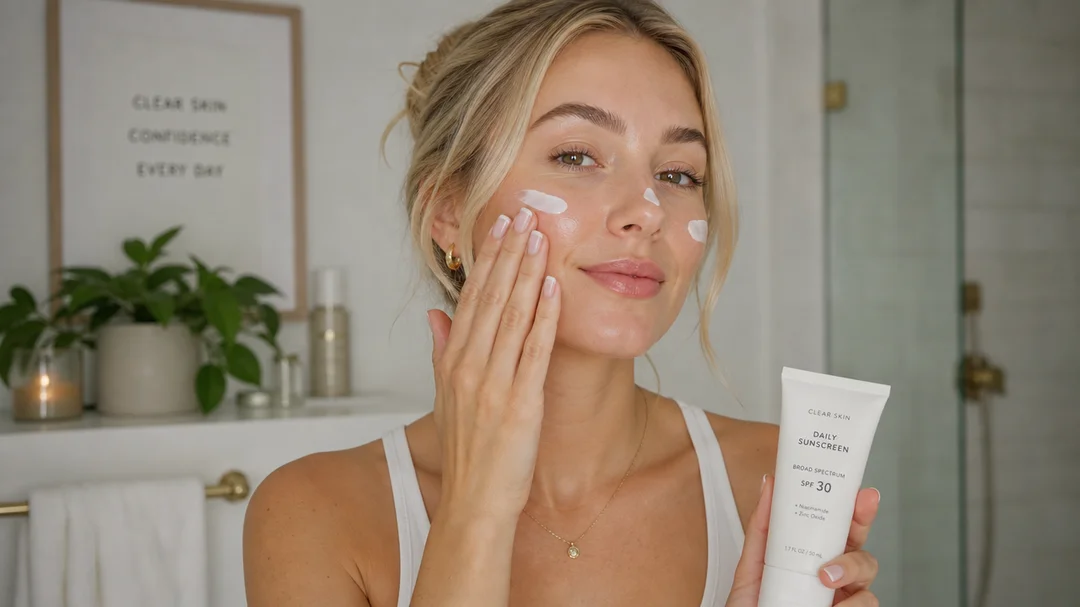
Daily SPF is consistently one of the most under-used, most effective habits for skin health. Beyond preventing sunburn, regular sun protection helps prevent the kind of cumulative UV damage that leads to dullness, uneven texture, and premature aging over time.
What helps: A broad-spectrum SPF 30 or higher, applied every morning — yes, even on cloudy days and even if you’re mostly indoors, since UV exposure through windows still adds up.
5. Avoid Touching or Picking at Your Skin
Hands carry bacteria throughout the day, and repeatedly touching your face can transfer that bacteria into pores, especially anywhere already irritated. Picking or popping blemishes disrupts the skin’s natural healing process and significantly raises the risk of scarring and further inflammation.
What helps: If you catch yourself touching your face out of habit, try to notice the trigger (stress, boredom) rather than just the action itself — that’s usually more effective than willpower alone.
6. Choose Non-Comedogenic Products
“Non-comedogenic” means a product is formulated not to clog pores. This matters across your entire routine, not just skincare — makeup, sunscreen, and even some hair products (if they touch your hairline or forehead) can contribute to breakouts if they’re pore-clogging.
What helps: Check labels for “non-comedogenic” or “oil-free,” especially for anything applied to acne-prone areas.
7. Keep Makeup Brushes and Pillowcases Clean
It’s easy to overlook, but makeup brushes and pillowcases accumulate oil, dead skin cells, and bacteria over time — and both come into repeated, prolonged contact with your face.
What helps: Wash makeup brushes weekly with a gentle cleanser, and change pillowcases every few days, more often if you have acne-prone skin.
8. Manage Stress Where You Can
Stress doesn’t just feel bad — it has a measurable effect on skin. Increased stress hormones can trigger inflammation and are linked to acne flare-ups in some people.
What helps: This doesn’t need to be complicated. Short daily habits — a walk, a few minutes of quiet, consistent sleep — tend to help more than occasional big gestures.
9. Prioritize Sleep
Skin does a lot of its repair work while you sleep. Consistently short or poor-quality sleep can show up as dullness, increased sensitivity, and a higher likelihood of breakouts.
What helps: Aiming for 7–9 hours consistently matters more than any single “great night’s sleep” here and there.
10. Pay Attention to Your Diet
The connection between diet and skin isn’t fully settled science, but some research links high-sugar diets and excess dairy intake to increased acne in certain people, according to Mayo Clinic. This doesn’t mean any single food “causes” breakouts, but for some people, noticing patterns between diet and flare-ups can be genuinely useful.
What helps: Staying hydrated, eating a diet with plenty of fruits, vegetables, and healthy fats, and limiting heavily processed, high-sugar foods where it feels sustainable — not as a strict rule, but as a general pattern.
When Skin Tips Aren’t Enough: When to See a Dermatologist
For most people, mild breakouts and occasional dullness respond well to the basics above, given a few weeks of consistency. But persistent, painful, or cystic acne — especially anything that leaves scarring or doesn’t improve after a solid routine — is worth bringing to a dermatologist rather than managing indefinitely on your own. Prescription options (topical retinoids, oral medications, professional treatments) can address cases that over-the-counter products alone can’t.

Some readers also look into additional at-home guides like Acne No More for extra strategies alongside their routine — though persistent or severe acne is genuinely worth a dermatologist’s input rather than relying on self-guided resources alone.
Affiliate disclosure: the link above is an affiliate link — we may earn a commission at no cost to you.
Common Skin Tips for Clear Skin Mistakes to Avoid
Even with good intentions, a few habits quietly undermine an otherwise solid clear skin routine:
- Layering too many active ingredients at once — combining retinoids, exfoliating acids, and vitamin C without easing in can overwhelm the skin barrier and cause irritation that looks like a breakout but isn’t.
- Switching products too often — since skin cell turnover takes weeks, judging a product after a few days rarely gives it a fair chance.
- Skipping sunscreen on “skin days off” — UV damage doesn’t pause because your skin needs a rest; SPF is one habit worth keeping non-negotiable.
- Using hot water to wash your face — similar to its effect on body skin, hot water can strip the face’s natural oils and worsen dryness or irritation.
- Ignoring the neck and jawline — routines often stop at the jaw, but breakouts and dullness in these areas usually respond to the same care as the rest of the face.
How Skin Type Changes the Approach
The 10 steps above apply broadly, but a few adjustments by skin type make a real difference:
- Oily or acne-prone skin: Lean toward oil-free, non-comedogenic products and consider a salicylic acid cleanser a few times a week — but don’t skip moisturizer, since over-drying oily skin often backfires.
- Dry or sensitive skin: Favor fragrance-free formulas, richer moisturizers, and go easy on exfoliation (once weekly is often plenty) to avoid compounding irritation.
- Combination skin: Consider a lighter moisturizer on the T-zone and a richer one on drier areas, rather than a single product for the whole face.
- Mature skin: Oil production naturally slows with age, so richer moisturizers and consistent SPF (to prevent further UV-related changes) tend to matter more here than aggressive exfoliation.
No matter which category fits best, the core skin tips for clear skin above still apply — skin type mainly changes how you apply them (product texture, frequency of exfoliation), not whether the fundamentals matter in the first place.
- Morning: Cleanse, moisturize, apply SPF.
- Evening: Cleanse (double-cleanse if wearing makeup/sunscreen), moisturize.
- 1–2x weekly: Exfoliate with a gentle chemical exfoliant.
- Ongoing: Clean brushes weekly, change pillowcases regularly, avoid touching/picking.
Most people notice visible improvement within 4–6 weeks of consistent basics — skin cell turnover takes time, so it’s worth giving a routine a real chance before assuming it isn’t working.
Frequently Asked Questions
How long does it take to see clearer skin?
Most people see noticeable improvement within 4–6 weeks of a consistent routine, since skin cell turnover naturally takes several weeks. Switching products too frequently before giving one routine a real chance is one of the most common reasons people feel like “nothing works.”
Do I need a 10-step skincare routine for clear skin?
No — a simple, consistent routine (cleanse, moisturize, SPF, occasional exfoliation) covers most of what actually matters. Elaborate routines aren’t inherently more effective, and can sometimes cause more irritation from product overload.
Can diet alone clear up my skin?
Diet can be one contributing factor for some people, but it’s rarely the whole picture. A balanced approach — skincare basics, stress management, sleep, and a generally healthy diet — tends to be more effective than focusing on diet alone.
Is drinking more water enough for clear skin?
Hydration supports overall skin health, but it’s a supporting habit, not a fix on its own — pairing it with the basics above (cleansing, moisturizing, SPF) makes a bigger difference than water intake alone.
When should I see a dermatologist instead of trying more products?
If breakouts are persistent, painful, cystic, or leaving scars despite weeks of a consistent routine, that’s a reasonable point to see a dermatologist rather than continuing to try new products on your own.
Should I follow a 10-step Korean skincare routine instead?
Elaborate multi-step routines can work well for some people, but they’re not required for clear skin. The fundamentals in this guide — cleansing, moisturizing, SPF, and occasional exfoliation — cover most of what actually matters. A longer routine is a personal preference, not a requirement for results.
The Bottom Line
Clear skin tips don’t need to be complicated to work. A simple, consistent routine — cleansing, moisturizing, daily SPF, and a few supporting habits around stress, sleep, and diet — covers most of what genuinely helps for most people. When breakouts persist despite doing the basics well, that’s the signal to bring in a dermatologist rather than adding more products to the shelf.
Related reading: What Causes Dry Skin on the Legs? · Best Cream for Seborrheic Dermatitis on Face · More Skincare Guides
Reviewed by Trudy Banks, Licensed Beautician · Last updated August 2026






 Trudy Banks
 Chloe MacAllister