


If you’re looking for how to get rid of forehead wrinkles, the honest answer is that no single method works for everyone — the right approach depends on whether you’re dealing with early fine lines or deeper, more established creases. This guide, reviewed by a licensed beautician, covers the full range of real options: natural prevention habits, proven skincare ingredients, and professional treatments, so you can figure out what actually fits your situation instead of guessing.
Why Forehead Wrinkles Form
Forehead wrinkles generally fall into two categories, and understanding which type you’re dealing with changes which treatments are actually worth trying:
- Dynamic wrinkles form from repeated facial movement — raising your eyebrows, frowning, squinting — and are visible even when your face is relaxed once they become established. These respond especially well to treatments that address muscle movement, like botulinum toxin injections.
- Static wrinkles are present even when your face is completely still, caused by a longer-term breakdown of collagen and elastin combined with the cumulative effects of sun exposure, aging, and skin thinning over time.
Most people have a mix of both, which is exactly why a combination approach — not just one product or one treatment — tends to work best.
Common Mistakes That Make Forehead Wrinkles Worse
Even with good intentions, a few habits can quietly work against your efforts to reduce forehead wrinkles:
- Skipping sunscreen on cloudy or indoor days — UV exposure through windows and on overcast days still contributes to cumulative damage over time.
- Squinting without sunglasses — repeated squinting is one of the most common causes of new dynamic wrinkles, and it’s an easy one to prevent.
- Sleeping in a position that presses your forehead into a pillow — repeated pressure over years can contribute to static lines, especially for side or stomach sleepers.
- Over-exfoliating — stripping the skin’s barrier too often can leave it more prone to dryness and make existing fine lines more noticeable, not less.
- Expecting overnight results from skincare — retinoids and peptide creams take months of consistent use; judging them after a week or two rarely gives them a fair chance.
- Ignoring dynamic wrinkles until they become static — repeated expressions eventually etch lines into the skin even at rest; addressing habits like squinting or frowning early can slow that transition.
How to Get Rid of Forehead Wrinkles at a Glance
| Method | Best For | Timeline | Access |
|---|---|---|---|
| Sun protection & hydration | Prevention, early fine lines | Ongoing | At-home |
| Facial massage | Temporary tension relief | Immediate, short-lived | At-home |
| Retinoids (OTC or prescription) | Fine lines, early static wrinkles | 3–6 months | At-home / dermatologist |
| Peptide-based creams | Supporting skin firmness | 8–12 weeks | At-home |
| Botulinum toxin (Botox) | Dynamic wrinkles | Results in days, lasts 3–4 months | Dermatologist |
| Dermal fillers | Deeper static lines | Immediate, lasts 6–18 months | Dermatologist |
| Microneedling | Overall texture, mild-moderate lines | Several sessions over months | Dermatologist / licensed provider |
| Laser resurfacing | Deeper, established wrinkles | Days to weeks recovery | Dermatologist |
1. Protect Your Skin From the Sun — The Single Most Important Habit
UV exposure is one of the biggest accelerators of wrinkle formation, breaking down collagen and elastin over time in a way that’s largely preventable. This isn’t just a “nice to have” — it’s consistently the step dermatologists point to first.
What helps: A broad-spectrum SPF 30+ applied every morning, reapplied if you’re outdoors for extended periods — yes, even on cloudy days.
2. Stay Hydrated
Well-hydrated skin looks plumper and can make fine lines less noticeable, though hydration alone won’t reverse deeper wrinkles. It’s a supporting habit, not a standalone fix.
What helps: Consistent water intake throughout the day, paired with a moisturizer that helps skin retain that hydration rather than lose it.
3. Use Antioxidant-Rich Skincare and Diet
Antioxidants — found in vitamin C serums, green tea extract, and antioxidant-rich foods like berries and leafy greens — help protect skin from free radical damage, which contributes to premature aging.
What helps: A daily vitamin C serum layered under sunscreen, plus a diet with a solid range of fruits and vegetables.
4. Choose Gentle Skincare Products
Harsh cleansers and hot water can strip the skin’s natural barrier, which can make fine lines and dryness more noticeable, not less.
What helps: A gentle, non-stripping cleanser and lukewarm (not hot) water for washing your face.
5. Try Facial Massage
Facial massage can temporarily improve circulation and relax tense facial muscles, which may soften the appearance of forehead lines short-term. It’s not a lasting fix on its own, but it’s a low-risk, relaxing addition to a routine.
What helps: A gentle upward massage using clean hands or a facial oil, avoiding excessive pressure on delicate areas.
6. Use Retinoids — The Most Evidence-Backed Skincare Ingredient
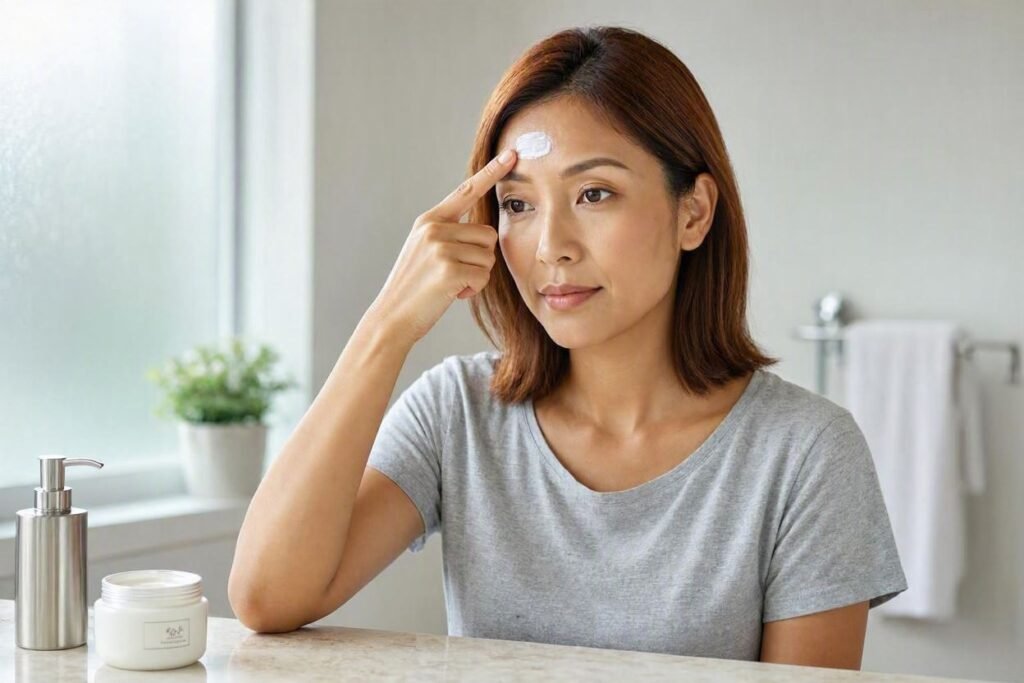
Retinoids (including over-the-counter retinol and prescription-strength tretinoin) are consistently identified as one of the most researched and effective topical ingredients for reducing fine lines and wrinkles, according to the American Academy of Dermatology. They work by speeding up cell turnover and boosting collagen production. According to Harvard Health, it typically takes three to six months of consistent use before improvements become visible, with the best results appearing after six to twelve months.
What helps: Start with an over-the-counter retinol a few nights a week to build tolerance, paired with a good moisturizer since retinoids can be drying. A dermatologist can prescribe stronger tretinoin if OTC options aren’t enough.
7. Consider Peptide-Based Creams
Peptide creams are formulated to support the skin’s collagen production and firmness. Some readers also look into products like Kollagen Intensiv, a peptide-based moisturizer, as part of a broader skincare routine — though as with most cosmetic peptide products, results vary from person to person and aren’t independently, peer-reviewed clinically verified.
Affiliate disclosure: the link above is an affiliate link — we may earn a commission at no cost to you.
8. Botulinum Toxin (Botox) — For Dynamic Wrinkles
For wrinkles caused by repeated muscle movement, botulinum toxin injections (commonly known by brand names like Botox) are one of the most widely used professional treatments. The American Academy of Dermatology notes that a dermatologist injects small amounts into targeted facial muscles, temporarily relaxing them so fine lines and wrinkles diminish — typically lasting three to four months before muscles gradually regain movement.
Best for: Dynamic forehead lines and frown lines that are visible even when your face is relaxed.
9. Dermal Fillers and Microneedling
For deeper static wrinkles or lost volume, dermatologists may recommend dermal fillers (which add volume beneath the skin) or microneedling (which stimulates collagen production through controlled micro-injuries). Both typically require a series of sessions and should only be performed by a licensed, qualified provider.
Best for: Deeper, more established static wrinkles that don’t respond as well to topical treatments alone.
10. Laser Resurfacing and Chemical Peels
For more significant wrinkles and sun damage, laser resurfacing and chemical peels work by removing damaged outer layers of skin to encourage smoother, more even regeneration underneath. These come with more downtime than injectables and are typically reserved for moderate-to-deep wrinkles.
Best for: Established, deeper wrinkles combined with sun damage or uneven texture.
Combining Methods: What a Realistic Routine Looks Like
Since forehead wrinkles rarely respond to just one approach, most dermatologists recommend layering methods based on your wrinkle type and stage rather than picking just one:
- For prevention (20s–30s, no visible wrinkles yet): Daily SPF, a gentle retinol a few nights a week, antioxidant serum, and good hydration habits form a solid baseline.
- For early fine lines (mild, mostly static): Add a stronger retinoid (OTC or prescription-strength), continue strict sun protection, and consider a peptide-based moisturizer as a supporting step.
- For dynamic wrinkles that bother you: Combine your skincare routine with a Botox consultation — skincare supports skin quality, while Botox addresses the muscle movement causing the lines in the first place.
- For deeper, established wrinkles: A dermatologist can combine professional treatments (like microneedling or resurfacing) with an at-home retinoid routine for longer-lasting results than either approach alone.
There’s no need to do everything at once — start with prevention and topical basics, and layer in professional treatment only if and when it’s genuinely needed.
When to See a Dermatologist

Natural habits and skincare ingredients are genuinely effective for prevention and early fine lines, but deeper, more established wrinkles typically respond better to professional treatment than to home remedies alone. If forehead wrinkles are affecting your confidence, worsening quickly, or not responding to consistent at-home care after several months, it’s worth a consultation with a board-certified dermatologist to go over which professional option — Botox, fillers, microneedling, or resurfacing — fits your specific skin and goals.
Frequently Asked Questions
How long does it take to see results from retinoids?
Most people notice visible improvement after three to six months of consistent use, with the best results typically appearing after six to twelve months. Retinoids need patience — switching products too soon before giving one a real chance is one of the most common reasons people feel like nothing is working.
Does drinking more water really reduce forehead wrinkles?
Hydration helps skin look plumper and can make fine lines less noticeable in the short term, but it won’t reverse deeper, established wrinkles on its own. It’s a supporting habit best paired with sun protection and proven ingredients like retinoids, not a standalone fix.
Can natural remedies alone get rid of forehead wrinkles?
Natural habits like sun protection, hydration, and gentle skincare are genuinely effective for prevention and very early fine lines, but they’re unlikely to significantly reduce deeper, established wrinkles on their own. For those, retinoids or professional treatments typically make a bigger difference.
Is Botox the only professional option for forehead wrinkles?
No — Botox is best suited for dynamic wrinkles caused by muscle movement, but dermal fillers, microneedling, and laser resurfacing are other professional options, each suited to different wrinkle types and depths. A dermatologist consultation is the best way to figure out which fits your specific situation.
At what age should I start worrying about forehead wrinkles?
There’s no universal age — it depends on genetics, sun exposure, and skincare habits. Many dermatologists recommend starting preventive habits like daily SPF and a gentle retinoid in your late 20s to early 30s, well before wrinkles become noticeable, since prevention is generally easier than reversal.
Do facial exercises actually work for forehead wrinkles?
Facial massage and exercises may temporarily improve circulation and relax tense muscles, offering short-term softening of the appearance of lines, but there’s limited strong evidence that they meaningfully reduce wrinkles long-term the way retinoids or professional treatments can.
The Bottom Line
There’s no single answer to how to get rid of forehead wrinkles — it depends on whether you’re dealing with dynamic or static wrinkles, and how established they are. Prevention (sun protection, hydration, gentle skincare) matters at every stage, retinoids are the most evidence-backed at-home option for fine lines, and professional treatments like Botox, fillers, or resurfacing are typically more effective for deeper, more established wrinkles. When home care isn’t cutting it, a dermatologist consultation is the most reliable next step.
Related reading: Skin Tips for Clear Skin · Best Cream for Seborrheic Dermatitis on Face · More Skincare Guides
Reviewed by Trudy Banks, Licensed Beautician · Last updated August 2026




 Trudy Banks
 Chloe MacAllister