

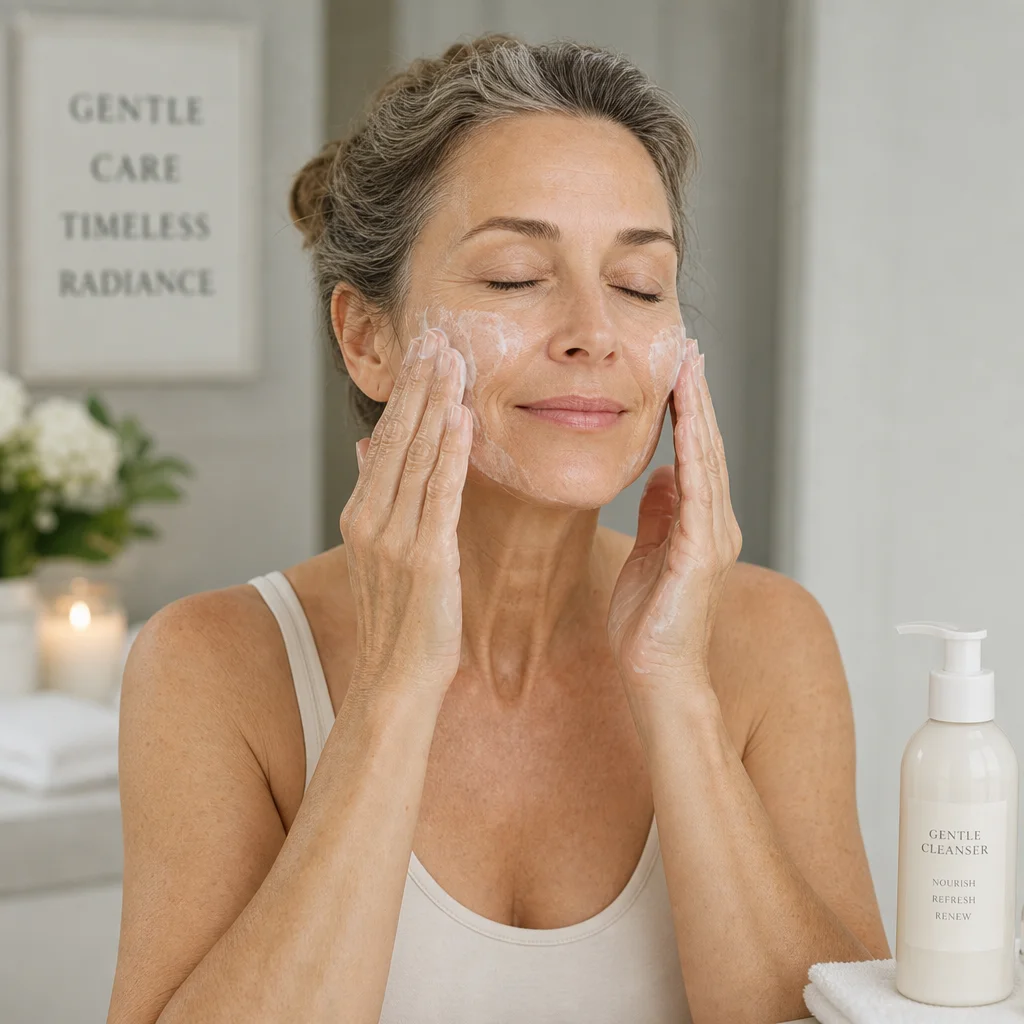
Finding the best facial cleanser for aging skin isn’t just about “gentle” marketing claims — it’s about understanding what actually changes in skin as it ages, and choosing a formula that works with that, not against it. This guide, reviewed by a licensed beautician, covers what to look for, what to avoid, and how cleansing fits into the rest of an aging-skin routine.
Why Cleanser Choice Matters More as Skin Ages
As skin ages, oil production naturally slows and the skin’s protective barrier becomes thinner and more easily disrupted. Harsh, foaming, or sulfate-heavy cleansers that might have been fine in your 20s can leave mature skin feeling tight, dry, or irritated — and a damaged barrier makes everything else in a routine (serums, moisturizer, sunscreen) less effective and more likely to sting or irritate. According to a dermatologist interviewed by the American Academy of Dermatology, gentle, non-stripping cleansers and fragrance-free formulas are consistently recommended for sensitive and aging skin, since introducing new products one at a time and avoiding unnecessary irritants helps skin tolerate the rest of a routine better.
What Makes a Cleanser Good for Aging Skin
Not every “gentle” cleanser is actually gentle. Here’s what genuinely matters when evaluating one:
- Sulfate-free, low-foam or cream formula — harsh surfactants strip natural oils that aging skin can’t easily replace.
- Barrier-supporting ingredients — glycerin, ceramides, and hyaluronic acid help cleanse while replenishing moisture rather than stripping it.
- Fragrance-free or minimal fragrance — added fragrance is one of the most common irritants for sensitive, aging skin.
- Mild pH — a cleanser that’s too alkaline can disrupt the skin’s natural acid mantle, which already weakens with age.
- No harsh daily exfoliation built in — gentle exfoliating cleansers (glycolic or lactic acid) are fine a few times a week, but daily gritty scrubs are usually too much for mature skin.
Best Facial Cleanser for Aging Skin at a Glance
| Cleanser Type | Best For | Watch Out For |
|---|---|---|
| Cream/milky cleansers | Dry, sensitive, or very mature skin | Can feel heavy for oily skin types |
| Gel-cream (low-foam) cleansers | Combination or normal aging skin | Check for sulfates in the ingredient list |
| Oil-to-milk cleansers | Removing makeup/SPF without stripping | Double-cleanse if wearing heavy makeup |
| Micellar water | Quick cleanse, sensitive skin | Not always enough alone for heavy makeup days |
| Mild exfoliating cleansers (glycolic/lactic) | Dullness, uneven texture | Limit to 2–4x weekly, not daily |
How to Use a Gentle Cleanser Correctly
Even the right cleanser can irritate skin if used incorrectly. A few habits make a real difference:
- Use lukewarm water, not hot — hot water strips natural oils faster than warm or cool water.
- Cleanse for 30–60 seconds, using fingertips rather than a rough washcloth or brush.
- Pat skin dry with a soft towel rather than rubbing.
- Double-cleanse on heavy makeup or SPF days — start with an oil or balm cleanser, then follow with your gentle everyday formula.
- Once daily may be enough for very dry or sensitive skin — some dermatologists suggest cleansing just in the evening if morning washing feels drying, using water alone or a very light rinse in the morning instead.
Ingredients to Look For
The best facial cleanser for aging skin isn’t just about what it removes — the ingredients left behind after rinsing matter just as much.
- Ceramides — support and help repair the skin’s natural barrier, which weakens with age.
- Glycerin — a humectant that draws in moisture during cleansing rather than after the fact.
- Hyaluronic Acid — helps maintain hydration even during the cleansing step.
- Niacinamide — supports the skin barrier and helps reduce redness, useful for reactive, aging skin.
- Colloidal Oatmeal — soothing for sensitive or irritated skin, often found in fragrance-free formulas.
Ingredients to Avoid or Limit
- Sulfates (SLS/SLES) — common foaming agents that can be too stripping for mature skin.
- Added fragrance/perfume — one of the most frequent triggers of irritation in sensitive, aging skin.
- Denatured alcohol high on the ingredient list — can be drying and disruptive to the skin barrier.
- Harsh physical scrubs used daily — micro-tears from daily scrubbing add up over time and can worsen sensitivity.
Signs Your Current Cleanser Is Too Harsh
Sometimes it’s not obvious that a cleanser is the culprit behind ongoing skin issues. A few signs worth paying attention to:
- Tightness right after washing that doesn’t ease up within a few minutes of moisturizing
- Redness or a stinging sensation during or immediately after cleansing
- Increased flakiness or rough texture that wasn’t there before switching products
- Skin that looks shiny or oily shortly after washing — sometimes a sign the skin is overproducing oil to compensate for stripping
- Makeup or serums not absorbing as smoothly as they used to, which can indicate a compromised barrier
If any of these sound familiar, it’s worth switching to a genuinely gentle formula for a few weeks before assuming the issue is something else in your routine.
Cleanser Recommendations Worth Knowing

While the ingredient and formula guidance above matters more than any single brand, a few widely available, dermatologist-recommended options consistently come up for aging or sensitive skin:
- Cream and milky cleansers — look for ones explicitly labeled fragrance-free and non-foaming; these tend to leave the least tightness after rinsing.
- Oat-based cleansers — colloidal oatmeal is a well-tolerated soothing ingredient, often found in formulas marketed for sensitive, reactive skin.
- Micellar waters — a good option on low-makeup days or for a gentle second cleanse, since they lift away debris without requiring rinsing or scrubbing.
- pH-balanced gel-creams — a middle ground between cream and foaming formulas, often suited to combination aging skin that doesn’t want a heavy cream but still needs gentleness.
Patch-testing any new cleanser — applying a small amount to the inner forearm for several days before using it on your face — is a simple way to catch potential irritation before it affects a more visible area.
Common Cleansing Mistakes That Age Skin Faster
A few habits quietly work against an otherwise good skincare routine, even with the right cleanser in hand:
- Washing with hot water — it feels good in the moment but strips protective oils faster than lukewarm water, leaving skin more prone to dryness and irritation over time.
- Using a washcloth or cleansing brush daily — physical friction, even from soft materials, adds up and can contribute to barrier damage on already-thinning mature skin.
- Over-cleansing — washing more than twice daily “to feel clean” often does more harm than good, especially for dry or sensitive skin types.
- Skipping moisturizer right after cleansing — the few minutes right after washing are when skin is most receptive to locking in hydration; waiting too long reduces how effective a moisturizer can be.
- Sticking with a foaming cleanser out of habit — many people continue using the same cleanser from their 20s well into their 40s and beyond, even as their skin’s needs have changed.
Cleanser and Skin Type: A Few Adjustments
Aging skin isn’t one uniform category — a few tweaks by skin type help fine-tune the general guidance above:
- Dry, mature skin: Favor cream or oil-based cleansers, cleanse only once daily if twice feels drying, and always follow immediately with a barrier-repair moisturizer.
- Combination aging skin: A gel-cream cleanser often works better than a heavy cream, balancing gentleness with a cleaner feel in oilier areas like the T-zone.
- Sensitive, reactive skin: Prioritize fragrance-free, minimal-ingredient formulas, and patch-test anything new before applying it to the full face.
- Skin using retinoids or other actives: An extra-gentle cleanser matters even more here, since actives already increase sensitivity — a stripping cleanser on top can compound irritation significantly.
Cleanser Isn’t a Standalone Fix — Where It Fits in a Routine
A gentle cleanser sets the foundation, but it works best paired with the rest of an aging-skin routine: a barrier-supporting moisturizer, daily broad-spectrum SPF, and — if appropriate for your skin — a retinoid or peptide product layered in gradually. Cleansing too aggressively or too often can actually undo the benefit of a good moisturizer or serum applied afterward, since it starts the whole routine from a compromised barrier.
When to See a Dermatologist
Most cleanser-related irritation resolves once you switch to a genuinely gentle, fragrance-free formula and adjust water temperature and washing frequency. But if skin remains persistently red, itchy, or reactive despite these changes, or if you notice new rashes, breakouts, or unusual changes in texture, it’s worth a dermatologist visit — occasionally what looks like general sensitivity is actually a specific condition like rosacea or contact dermatitis that benefits from targeted treatment rather than just a gentler cleanser.
Frequently Asked Questions
How often should aging or sensitive skin be cleansed?
Twice daily is standard, but for the best facial cleanser for aging skin, some dermatologists suggest once daily (in the evening) is enough for very dry or sensitive skin, using just a water rinse in the morning if a full cleanse feels drying.
Is a foaming cleanser bad for aging skin?
Not automatically — but foaming cleansers often rely on stronger surfactants to create lather, which can be more stripping. If you prefer a foaming formula, look for a sulfate-free option specifically labeled gentle or for sensitive skin.
Should I exfoliate with my cleanser every day?
No — daily exfoliating cleansers (with glycolic or lactic acid) are usually too much for aging skin. Limiting exfoliation to 2–4 times a week helps avoid over-stripping the barrier.
Do I need a different cleanser for morning and night?
Not necessarily. Many people use the same gentle cleanser both times, though a fuller double-cleanse (oil or balm, then gentle formula) at night helps remove makeup and sunscreen more thoroughly.
Can the wrong cleanser cause wrinkles?
Not directly, but a cleanser that consistently strips and irritates the skin barrier can make existing fine lines more noticeable and slow down how well other anti-aging products in your routine actually work.
Is it worth switching cleansers seasonally?
For some people, yes. Skin often needs less stripping and more hydration support in winter (drier air, indoor heating) and can sometimes tolerate a slightly stronger cleanse in humid summer months. If your skin feels consistently comfortable year-round with one formula, there’s no need to switch just for the sake of it — but if you notice seasonal tightness or excess oil, adjusting your cleanser accordingly is a reasonable response.
Do expensive cleansers work better than drugstore options?
Not necessarily. Price doesn’t reliably predict gentleness or effectiveness — a well-formulated, sulfate-free, fragrance-free drugstore cleanser can outperform a more expensive option with a harsher ingredient list. Reading the actual ingredient list matters more than the price tag.
The Bottom Line
The best facial cleanser for aging skin isn’t about finding the most expensive or trendiest formula — it’s a gentle, barrier-supporting, fragrance-free cleanser used correctly (lukewarm water, gentle application, not over-washing) that sets up the rest of your routine to actually work. Get this one step right, and everything layered on top of it — moisturizer, SPF, treatments — performs better.
Related reading: How to Get Rid of Forehead Wrinkles · Skin Tips for Clear Skin · More Skincare Guides
Reviewed by Trudy Banks, Licensed Beautician · Last updated August 2026





 Trudy Banks
 Chloe MacAllister